
Boil down the 2026 forecasts from the overseas wedding press and you get one line: show less, stay longer. Guest lists and decoration are shrinking; the time a couple and their families spend together is growing. Drawing on reports from The Knot and Zola in the US, Hitched in the UK and the European venue group Belmond, here are seven trends. (As of November 2026)
1. Fewer guests, more time
The Knot's 2026 Real Weddings Study, a survey of 10,000 US couples married in 2025, puts the average guest count at 117 and spending per guest at $292, up on the year before. Couples invite fewer people and spend more on each one. The wedding platform Joy writes in its 2026 trend roundup that many couples are cutting from 200 guests to 80–100.
What to bring to Korea: the idea of trading guests for time. Overseas, four to six hours from ceremony to reception is standard, while a wedding in Korea usually runs one to two hours. Trim the guest list and allow more time as well, and the time you spend with each guest grows with it.
2. Not a day but a weekend
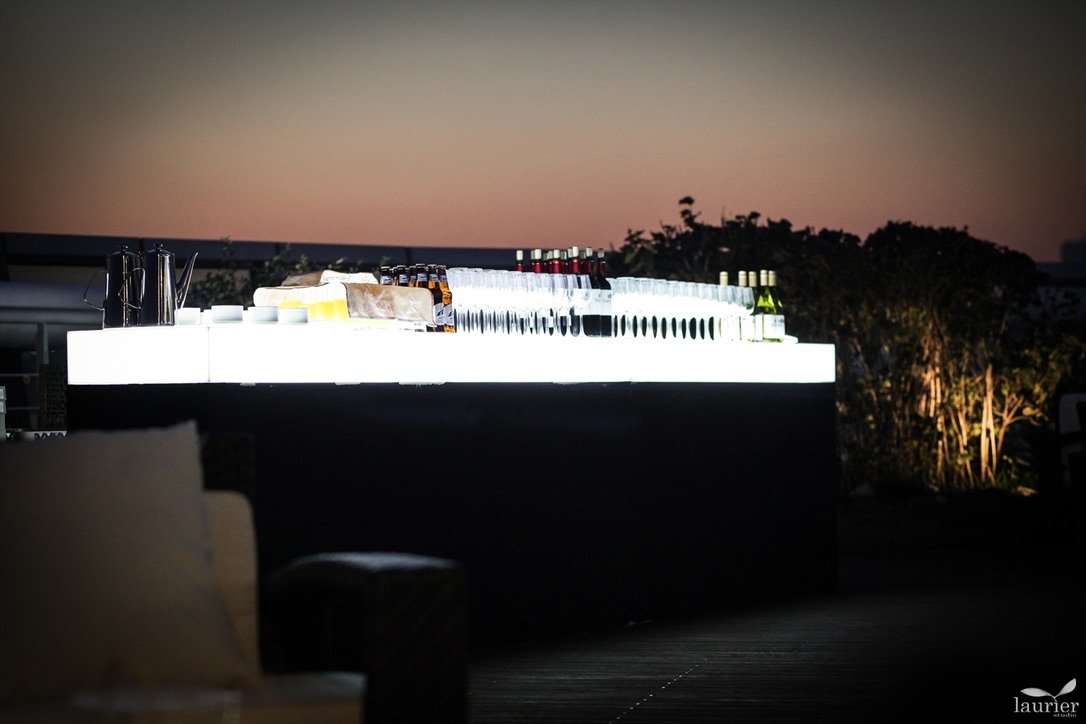
Zola's 2026 First Look Report finds that 37% of couples hold at least one extra event such as a welcome party or next-day brunch, and 18% plan a two-to-three-day "wedding weekend". The more overseas guests, the higher the share — it is hard to fly family across the world, show them a one-hour ceremony and send them home.
What to bring to Korea: planning the family meeting, welcome dinner, wedding and after-party as one sequence. For an international couple, a dinner for both families the night before, the wedding and party on the day, and a Seoul tour the day after make a natural three days.
3. Taking the running order apart
The trend magazine THE WED lists the "non-linear timeline" among its 50 Major Wedding Trends for 2026. Vows may land between dinner and dancing; the ceremony may be short and the reception long. In The Knot's survey, 61% of couples wrote their own vows and 32% wove religious, ethnic or cultural elements into the day.
What to bring to Korea: the principle that the couple sets the order. There is a condition, though — the venue has to allow the running order and timetable to be adjusted. A venue with a generous time slot, such as the Marina Park garden, lets a couple decide the sequence of ceremony, cocktails, dinner and after-party themselves. Venues operate differently, so it is worth asking in advance whether the running order can be changed.
4. Formal set pieces are leaving — depending on the generation
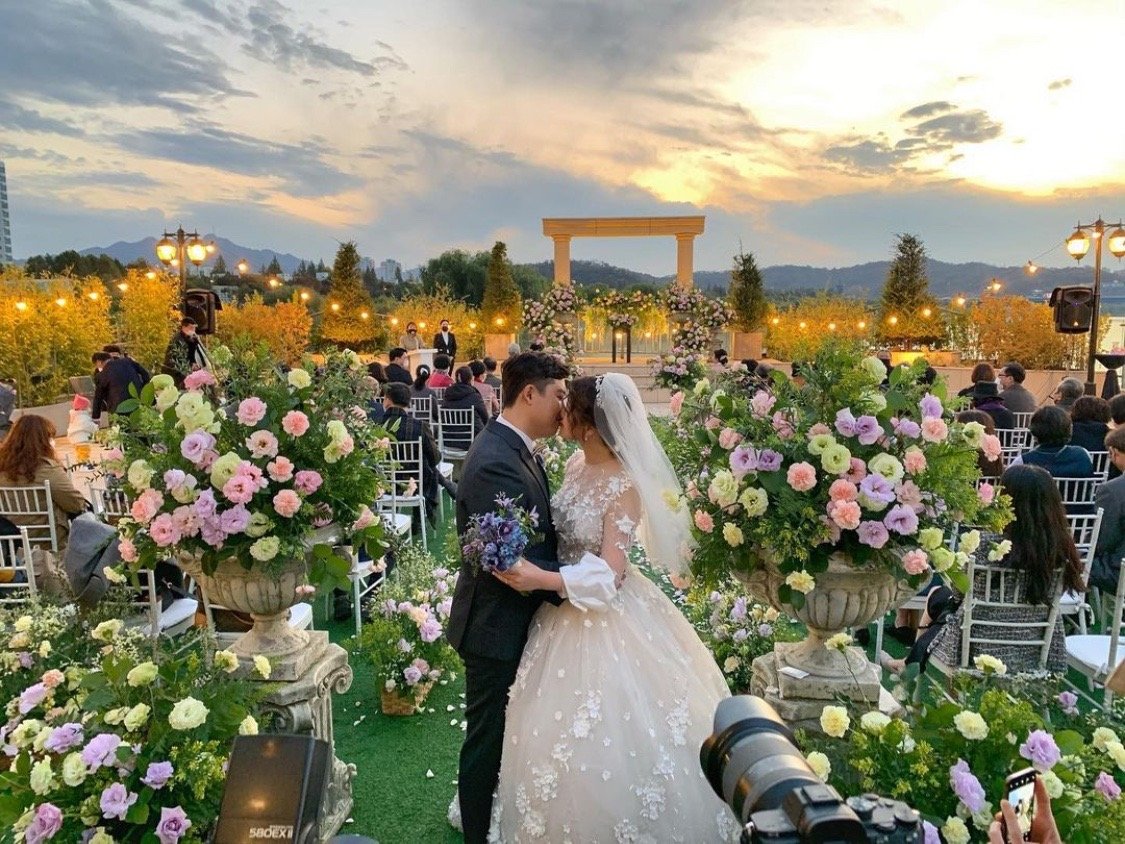
The Knot's Future of Marriage: 2026 Trends to Watch asked engaged couples what will go out of style in 2026. Traditional set pieces such as the bouquet and garter toss, showy staging and made-for-social-media stunts topped the list. The counter-current is the interesting part: Zola writes that Gen Z is bringing back the bouquet toss, tiered cakes and large wedding parties as "retro". What millennials cleared away, Gen Z enjoys as vintage.
What to bring to Korea: the attitude that you may drop any part you do not want. What to leave: adding something only because it is in fashion. If a moment would make both families uncomfortable, leave it out.
5. Colourful bouquets and installation florals
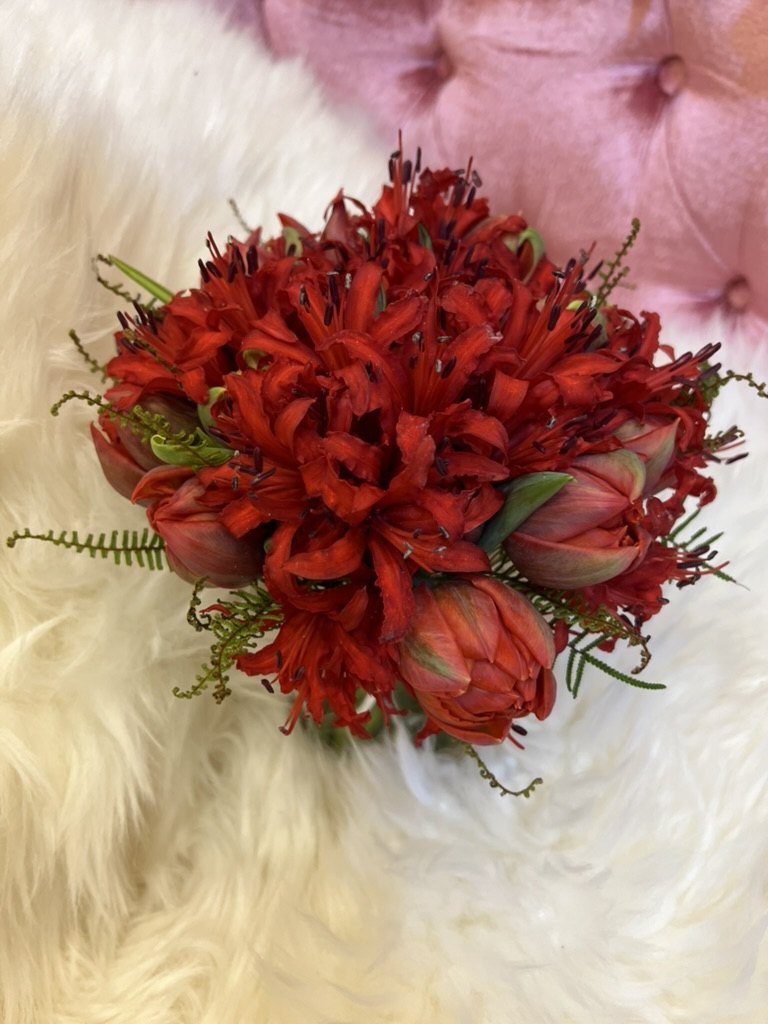
Belmond's 2026 Wedding Trends cites search data from Hitched in the UK: searches for "colourful bridal bouquet" are up 267%. The move is away from all-white flowers towards vivid dahlias and hibiscus, and away from flowers on every table towards one or two large "gallery-style" installations.
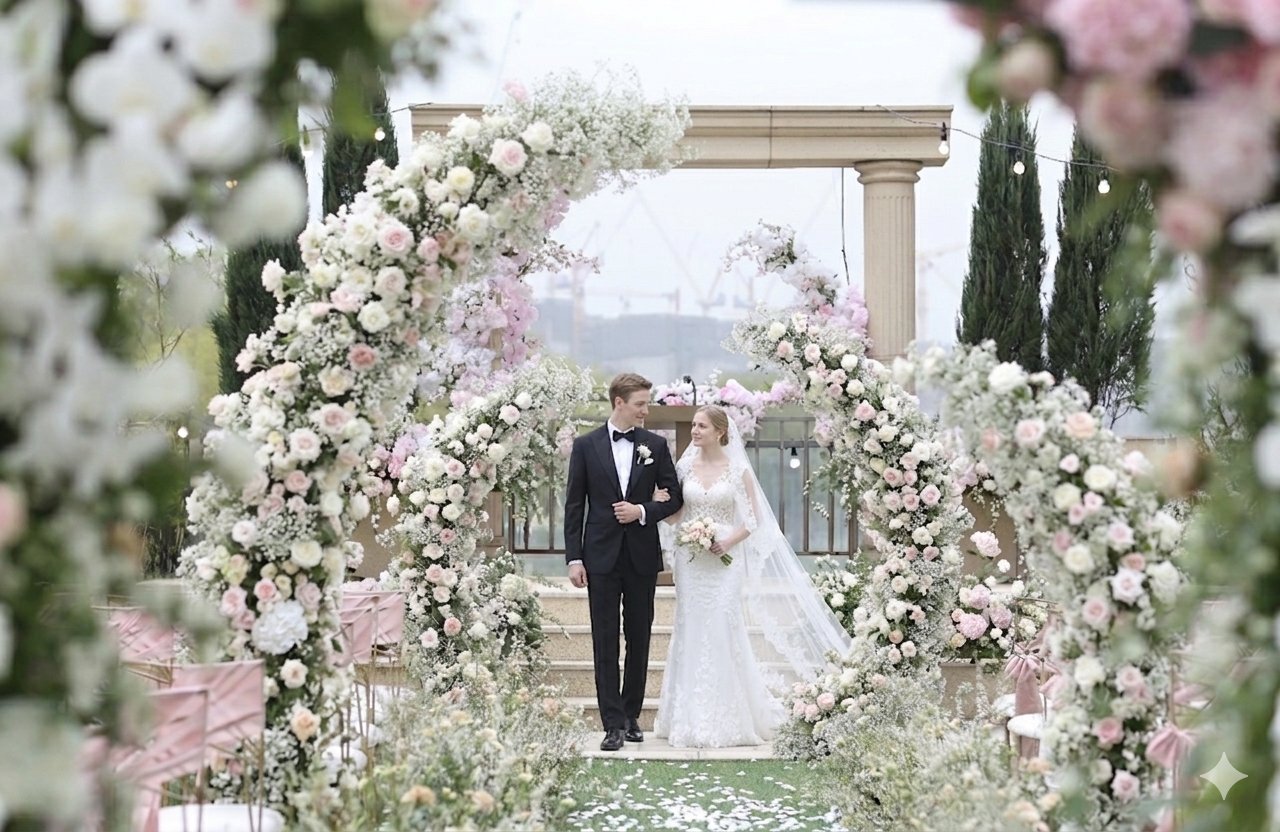
What to bring to Korea: placement, not quantity. In a hall that already has a backdrop — a glass wall or the open air — fewer flowers concentrated in one spot photograph better. Seasonal flowers also bring the cost down.
6. Values come into the day
In The Knot's survey, 28% of couples made eco-conscious choices and 22% chose locally produced food. Belmond names the "wellness wedding" as a trend — pre-ceremony meditation, plant-based menus, alcohol-free parties — and Zola notes that mocktail menus are entering the bar programme.
What to bring to Korea: this matters most for international couples. If some guests avoid alcohol and pork for religious or health reasons, check that the venue treats halal and vegetarian menus and alcohol-free drinks as standard, not as options.
7. Documentary photos, AI planning
THE WED's photography trends for 2026 are documentary style, film and camcorder textures, and unstaged guest moments. In planning, the use of AI has risen fast: 36% of engaged couples in The Knot's survey and 54% in Zola's used AI. Yet 63% of Zola's respondents said AI should not write the vows.
What to bring to Korea: AI for schedules, budgets and guest lists. What to leave: the vows and the letters. Those should be the couple's own words.
What to check when applying this in Korea
| Trend | What to bring | What to ask the venue |
|---|---|---|
| Smaller, longer weddings | Fewer guests, more time | Is the slot three hours or more, with no wedding straight after? |
| Wedding weekend | The night before, the day and the day after as one sequence | Is there a small dining space on site for the night before? |
| Non-linear order | Set the order of ceremony and party yourselves | Can the running order and timetable be changed? |
| Choosing the set pieces | Drop what feels awkward | Do the MC and production team accept a custom order? |
| Colour and installation florals | Placement over quantity | Are outside flowers and installation time allowed? |
| Values | Halal, vegetarian, alcohol-free | Are menu alternatives standard, or an extra cost? |
| Documentary photos | Unstaged moments | Can photographers move freely? Are drones allowed? |