
On venue tours the heart goes first to the place that photographs best. Overseas wedding planners' guides work the other way: fix the guest count, keep only the venues that number fits, and then look at atmosphere. A venue the numbers do not fit looks empty or feels cramped however it is dressed. (As of November 2026)
First, settle the guest count to within 20
The wedding platform Joy's guide to choosing a venue says that even without a final list, an estimate within about 20 people is enough to filter venues. Then add a margin: with around 90 guests, look at venues that comfortably hold 100–110.
It notes the mistake in both directions. Seat 80 in a room for 200 and it looks empty; put 140 into a room for 100 and guests are uncomfortable.
Invited and attending are different numbers. A capacity guide from a US wedding venue gives these attendance rates.
| Type of wedding | Expected attendance |
|---|---|
| Most guests local | 80–85% |
| Many guests from out of town | 70–75% |
| Destination wedding | 60–70% |
| Weekday wedding | 10–15% lower than the above |
Invitations go out more widely in Korea, so the ratios may differ, but the calculation is the same: invited × expected attendance = the starting point for your guarantee.
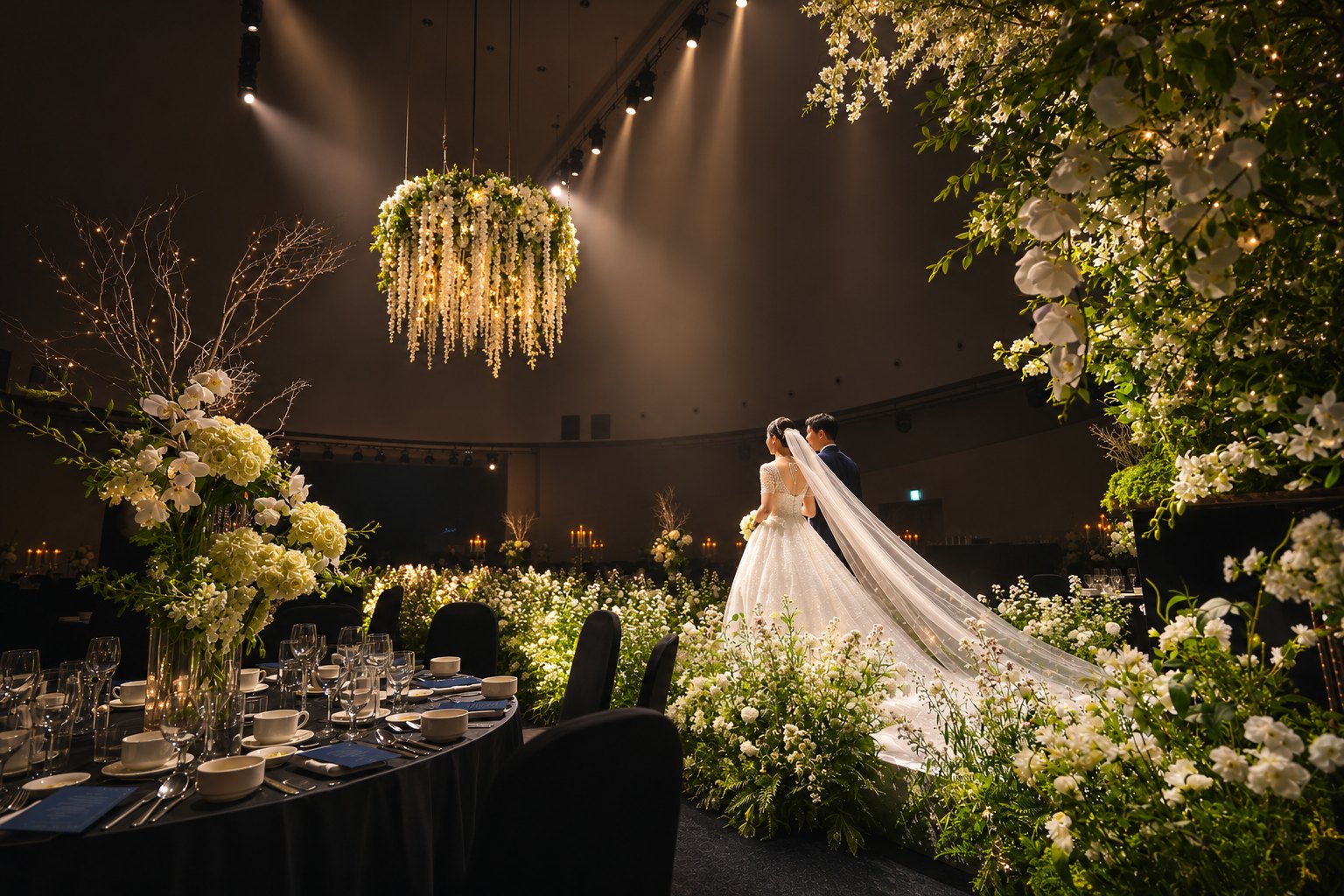
Check it against space per guest
The same guide gives the space needed per guest, converted here from square feet.
| Layout | Space per guest |
|---|---|
| Seated dinner with dance floor | About 1.1–1.4 m² |
| Seated dinner only | About 0.9–1.1 m² |
| Standing cocktail reception | About 0.7–0.9 m² |
| Ceremony seating (theatre style) | About 0.6–0.7 m² |
It also recommends treating 80–85% of a venue's stated maximum as the comfortable number. A hall with a maximum of 300 is comfortable at 240–255. The same sum explains why a wedding of more than 200 usually needs a hall rated for 250 or more.
The type of venue for each guest count
50 or fewer — a dedicated small hall or garden. At a small wedding the space makes the mood. A private hall or garden designed at that scale is better than a large hall divided by screens. Check the minimum guarantee: many halls take 100 or more only.
50–150 — an outdoor garden or rooftop. The last size at which every guest can see the ceremony up close. Outdoors, the wet-weather alternative is a condition. Joy advises asking whether the indoor alternative holds the full guest count, by when the move indoors must be decided (the night before or the morning), and whether it costs extra — and getting the answer in writing.
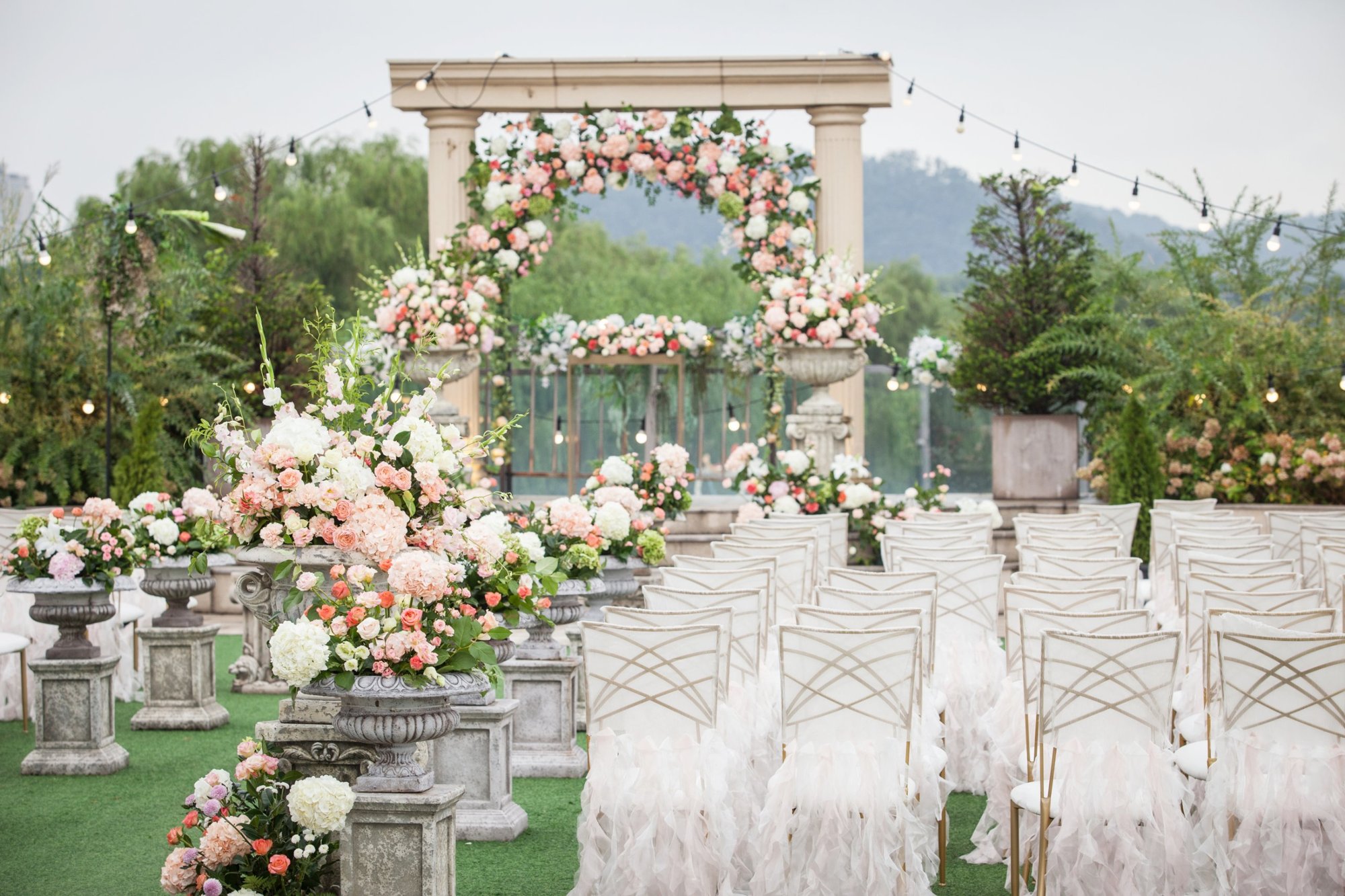
150–300 — a medium to large indoor hall. The most common size in Korea. From here, whether ceremony and seated meal share one space or the banquet room is separate decides the flow.
300 or more — a convention hall. Past 300 guests, the lobby, parking, lifts and number of restrooms matter more than the décor. The ceiling has to be high for the back rows to see the stage, and a large screen is needed for the ceremony to carry.
Questions to ask on the tour
From Joy's twelve questions, these apply as they are at venues in Korea.
- What is the maximum capacity for a seated meal?
- What is included in the venue fee?
- Is there another wedding that day, and how far apart are the weddings before and after?
- Is there an end time or a limit on sound?
- What is the wet-weather alternative and when is it decided?
- Is a bridal room included?
- How many parking spaces, for how many hours?
- What are the cancellation and change terms?
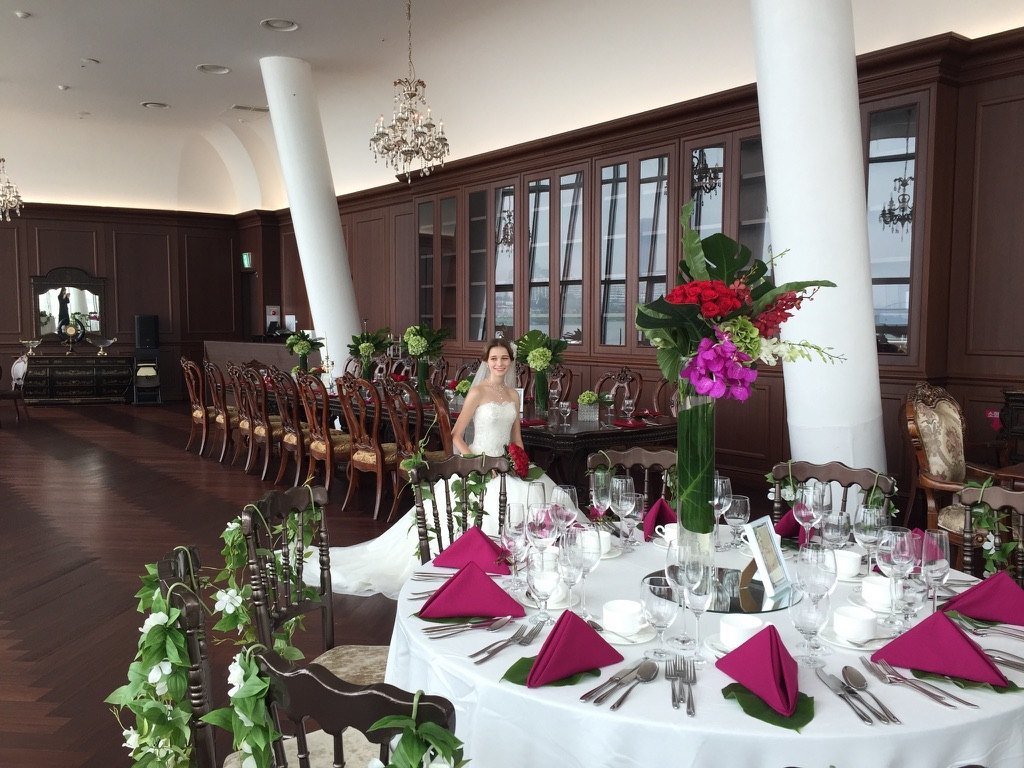
What to check when applying this in Korea
| What to check | Why it matters |
|---|---|
| Minimum and maximum guarantee | If the number is out of range, nothing else matters |
| Whether your guests fit within 80–85% of the maximum | The stated maximum is a full room |
| Whether the same building has halls of different sizes | If the guest count changes, you only change hall |
| For outdoors, the capacity of the indoor alternative and the decision time | It is only an alternative if everyone fits |
| The interval between weddings | The more guests, the longer entrance and exit take |
| Parking spaces and coach drop-off | For 300 guests, think of 100 cars or more |
For example, Sevit Island on the Han River in Seoul has a 500-seat Convention Hall with a 13-metre ceiling, a garden and rooftop, and a private hall for 50 in one place, so a couple can choose among halls on the same site if the guest count changes, within a generous time slot of three hours or more. Whichever venue you see, work out first whether your guest count is about 80% of its maximum.
Summary
- Estimate guests to within 20 (invited × attendance)
- See whether that number fits within 80–85% of the venue's maximum
- A dedicated small hall for 50 or fewer, a garden for 50–150, a convention hall for 300 or more
- Outdoors, get the indoor alternative's capacity and decision time in writing