
Five hundred guests is the size of a small concert. From that number on, a hall that runs well matters more than a hall that looks pretty. If the entrance backs up, the ceremony starts late; if the food does not come out together, the back tables wait half an hour. Drawing on advice from publications that specialise in large events and on how Korean convention halls operate, here is what to check for a large wedding.
What changes at 500
The wedding and events publication The Bridal Journey sums up the principle for large weddings in its guide to weddings for 300 to 3,000: scale everything together. Double the guests and it is not only the tables that double but the serving staff, sound, parking, ushers and contingency plans. In practice:
- Divide the space into zones: dining and rest, stage and ceremony, photo zone, entrance and exit. If 500 people come through one door, registration alone takes twenty minutes.
- Something new every 15–30 minutes: large weddings drag easily. Keep the sequence tight — ceremony, film, song, toast, cake — and give guests a programme.
- Allow for attendance: the larger the wedding, the less reliable the replies. Expect 15–20% not to come, but prepare for more than expected too.
- Vendors with experience at scale: ask your photographer, videographer and sound team what their largest wedding was. The flow changes as the numbers grow.
Why a convention hall has the advantage
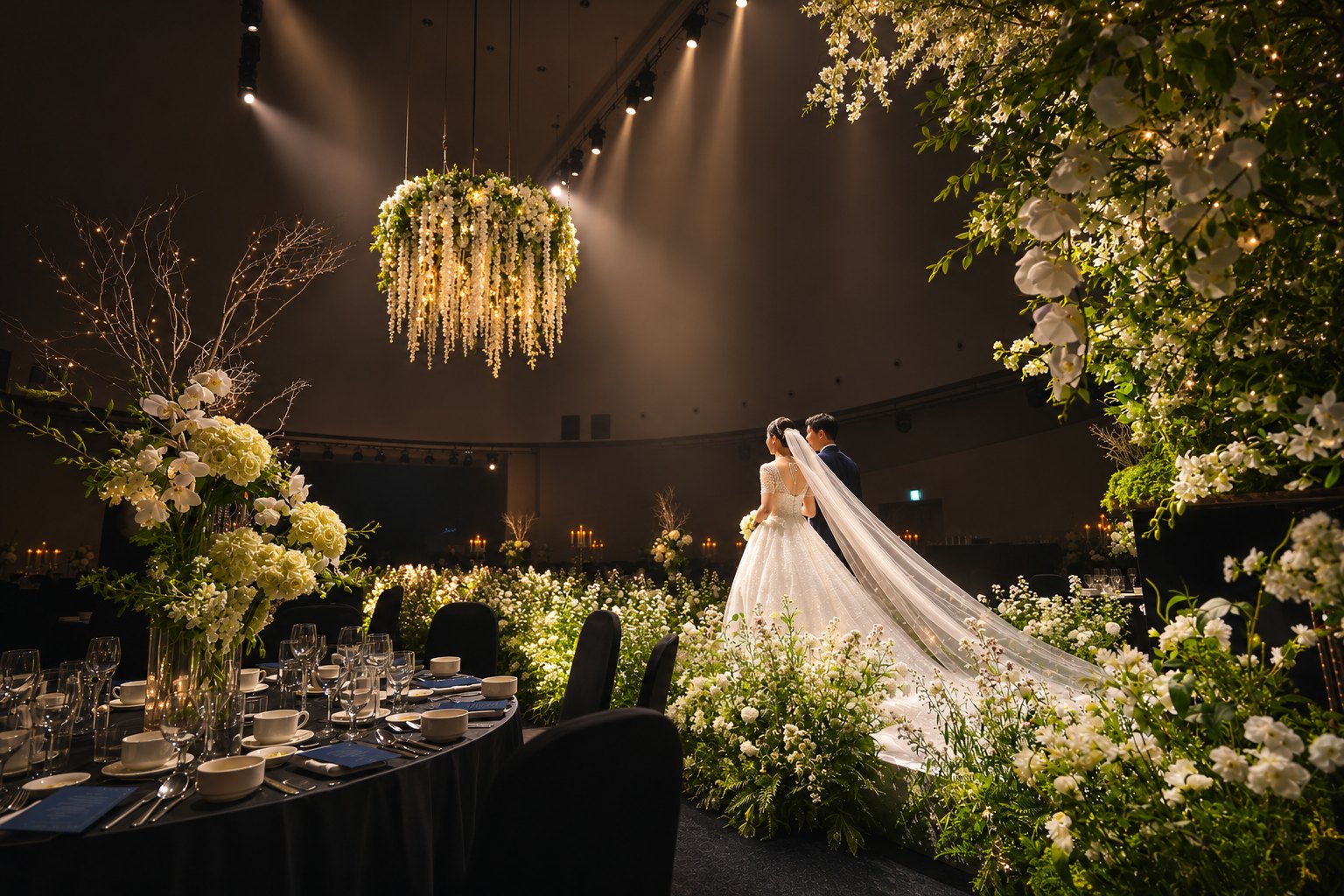
1. One space, one line of sight. For 500 people to see the ceremony from the same angle you need a large hall without pillars and a large screen. A convention hall's stage and screens are designed for a large audience from the start.
2. The food comes out together. A plated meal for 500 depends on kitchen flow and serving staff. A convention hall hosts banquets for hundreds every week, so fifty tables receive the same course at the same time. For a buffet, four or more lines cut the queue.
3. There is a lobby. If registration, the photo table, welcome drinks and group-photo queues all happen inside the hall, the ceremony starts late. A hall with a large lobby handles all of it outside, and guests are seated when the ceremony begins.
4. Parking and shuttles. Five hundred guests means 150–200 cars. If the car park is far from the hall you need a shuttle, and groups arriving by coach (colleagues, alumni) need somewhere to pull up. Without both, it is hard to start on time.
5. A generous time slot. A wedding for 500 takes more than two and a half hours for the entrance, ceremony, meal and group photographs alone. When weddings are scheduled close together, your guests may overlap with the next wedding's in the lobby before the meal is over. With three hours or more, even a large wedding ends unhurried.
Making a large wedding feel small
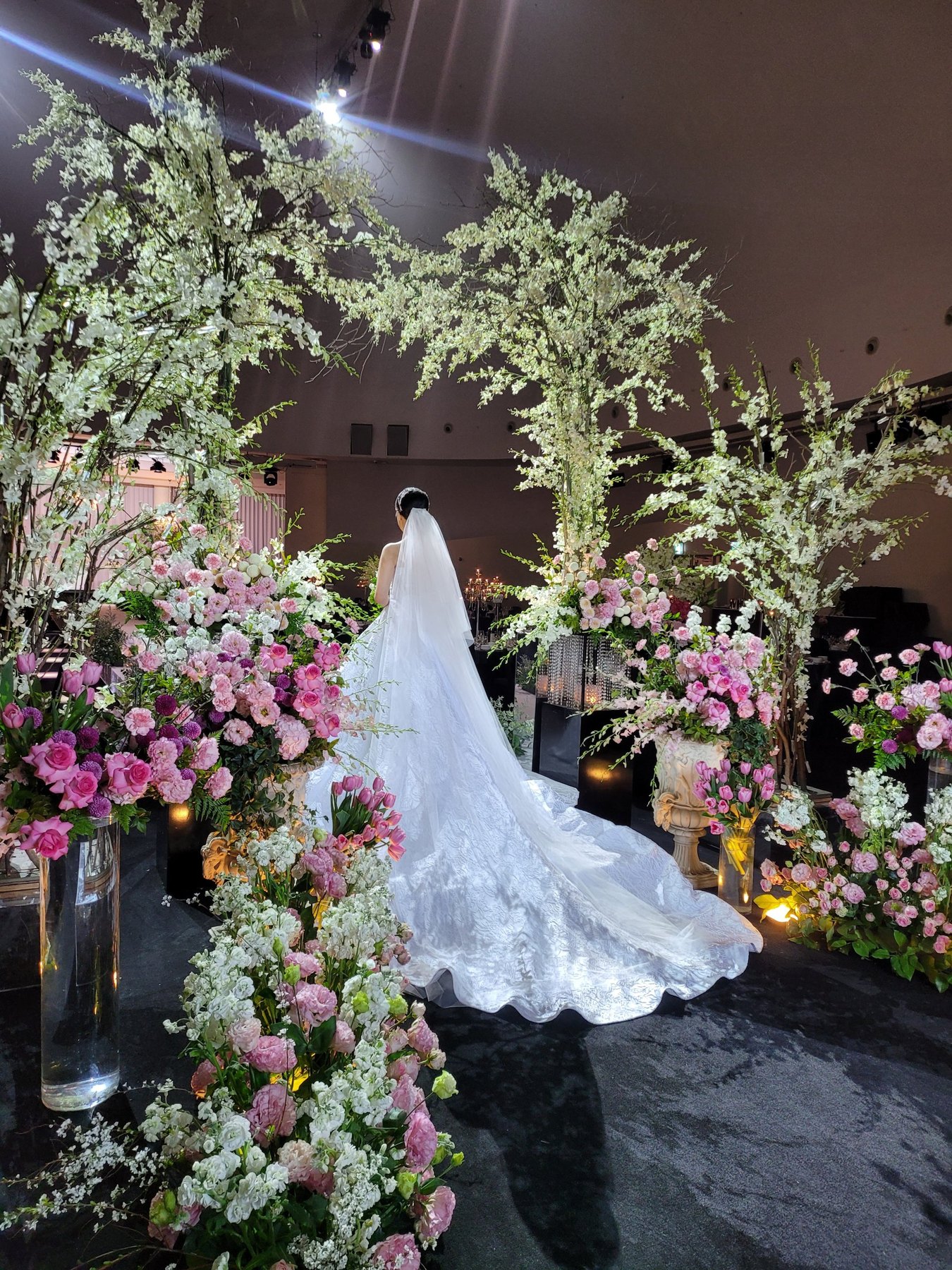
Style Me Pretty suggests grouping guests into small units to make a large guest list feel intimate. Seat tables by group (colleagues, alumni, relatives) and place a card on each explaining its connection to the couple, and even at a wedding for 500 each table feels like a small gathering. Telling both families' stories on the photo table and in the film — so guests know whose wedding this is — has the same effect.
What to check when applying this in Korea
| What to check | Why it matters |
|---|---|
| Maximum seated capacity and minimum guarantee | Whether 500 seated is comfortable, not just possible. Check pillars and sightlines |
| Reach of the screen and sound | Do picture and sound reach the back tables? |
| Lobby size and registration flow | Three or more registration desks; photo table in the lobby |
| Serving staff and number of buffet lines | Experience serving 500 at once |
| Parking spaces and coach drop-off | 150–200 cars, space for group coaches |
| Length of the slot | Three hours or more, with no overlap with the next wedding |
| Location of the bridal room and VIP room | So the parents' waiting area and the guest flow do not cross |
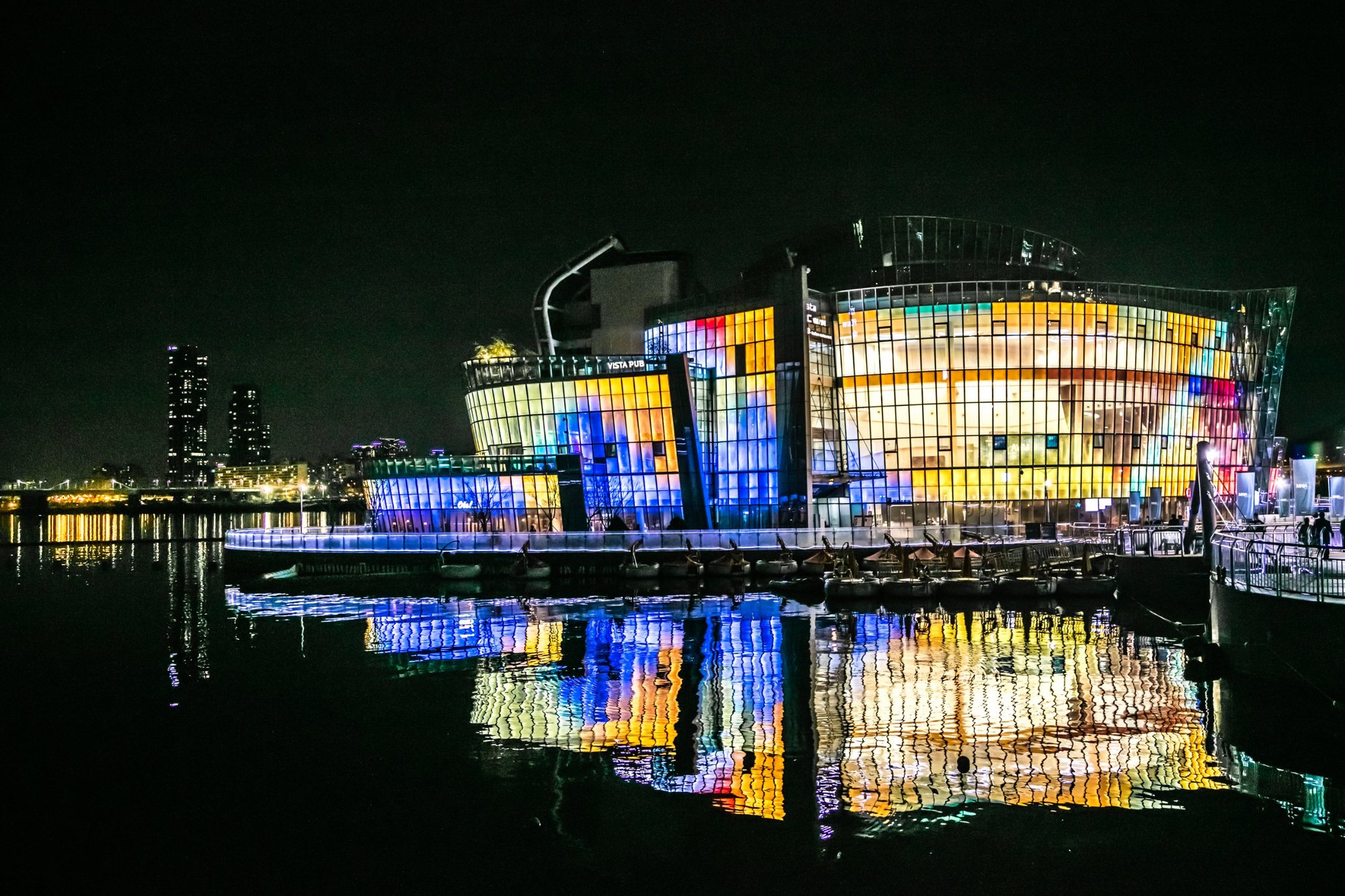
For example, the Floating Island Convention Hall at Sevit Island on the Han River in Seoul is a white dome with a 13-metre ceiling that seats 500, with images 45 metres wide by 12 metres projected overhead and a lobby; it offers parking for 900 cars, coach drop-off and a shuttle from the Express Bus Terminal, and runs ceremony and banquet as one sequence within a generous time slot. At any venue, whether it can answer the seven rows above with numbers is the test of whether it can take a large wedding.
Summary
- From 500 guests, a hall that runs well comes first: sightlines, food, lobby, parking, time.
- The larger the wedding, the tighter the sequence (every 15–30 minutes) and the smaller the groups.
- Seven numbers to ask the venue: seated capacity, screen and sound reach, registration desks, serving lines, parking spaces, length of slot, location of waiting rooms.