
Read enough lists of European wedding venues and a pattern appears. The names change, but the conditions repeat: water or a garden as the backdrop, a modest guest count, and a stay of several days instead of one. Drawing on venue features from THE WED and The Knot, here is a tour of castle and lake venues, and how to carry their logic into a venue visit in Korea. (As of November 2026)
France: the château, a whole house for the wedding
THE WED's 36 Best Wedding Venues in Europe lists several French châteaux: Château de Villette near Paris, Château de Challain and Château du Grand-Lucé in the Loire, and Château de Fonscolombe in Provence.
What defines a château wedding is the format, not the size. Château de Challain is described as seating up to 120 guests, a small number for a building of that scale. Guests stay in or near the house, and the dinner the night before, the ceremony and the brunch the day after all take place in the same gardens. For a few days the building becomes one family's home.
Italy: villas on Lake Como, and Tuscany
In the same list, Italy divides into lakes and hills: Villa Balbiano and Villa d'Este on Lake Como, Castello di Vicarello in Tuscany, and La Foleia, which hosts up to 80 guests.
At a lake venue the running order is built around the water. Guests arrive by boat, the ceremony stands with the lake behind it, and cocktail hour is timed for the sun dropping behind the mountains. The photographs look full with few flowers because the backdrop is already there.
Ireland and Scotland: castles and weather
The Knot's guide to European destination weddings introduces Ashford Castle in Ireland and the castles of Scotland, and notes the season for each region. Every area has its good months, and where rain is frequent the indoor rooms carry half the wedding. The same article reports that roughly one in five US couples has a destination wedding.
The lesson from castle venues is simple. An outdoor wedding on a fine day only works when the scene for a wet day has been prepared too.
Four things European venues share
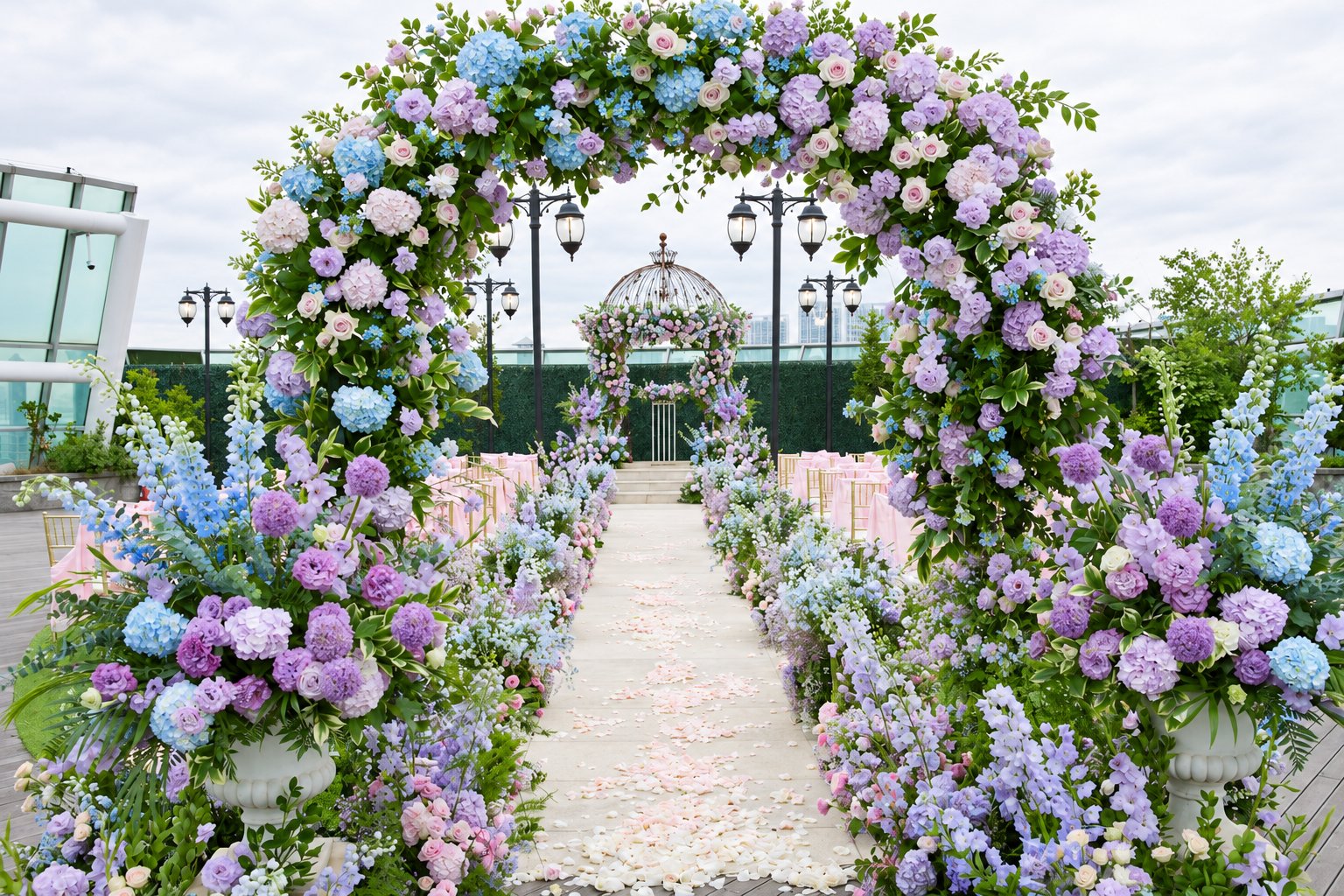
- The backdrop comes first. A lake, a river, a garden, old stone. Decoration is added only as far as it does not hide the view.
- The guest count is limited. A clear ceiling of 80 or 120, and more time for each person within it.
- Time is generous. Ceremony, cocktails, dinner and party follow one another in a single place.
- There is a rain plan. An indoor hall or a tent is part of the layout from the start.
What to check when applying this in Korea
| The European condition | What to ask a venue in Korea |
|---|---|
| Water or garden backdrop | What you actually see from the windows or terrace, and how it changes in the evening |
| A fixed guest ceiling | Minimum and maximum numbers, and seated capacity |
| A generous time slot | Whether one slot is three hours or more, and whether you can adjust the running order |
| A rain plan | Whether the indoor alternative is in the same building, and when the decision is made |
| Events before and after | Whether there is a smaller dining room on site |
| Guest travel | Public transport, shuttle, parking, and distance from hotels for overseas guests |
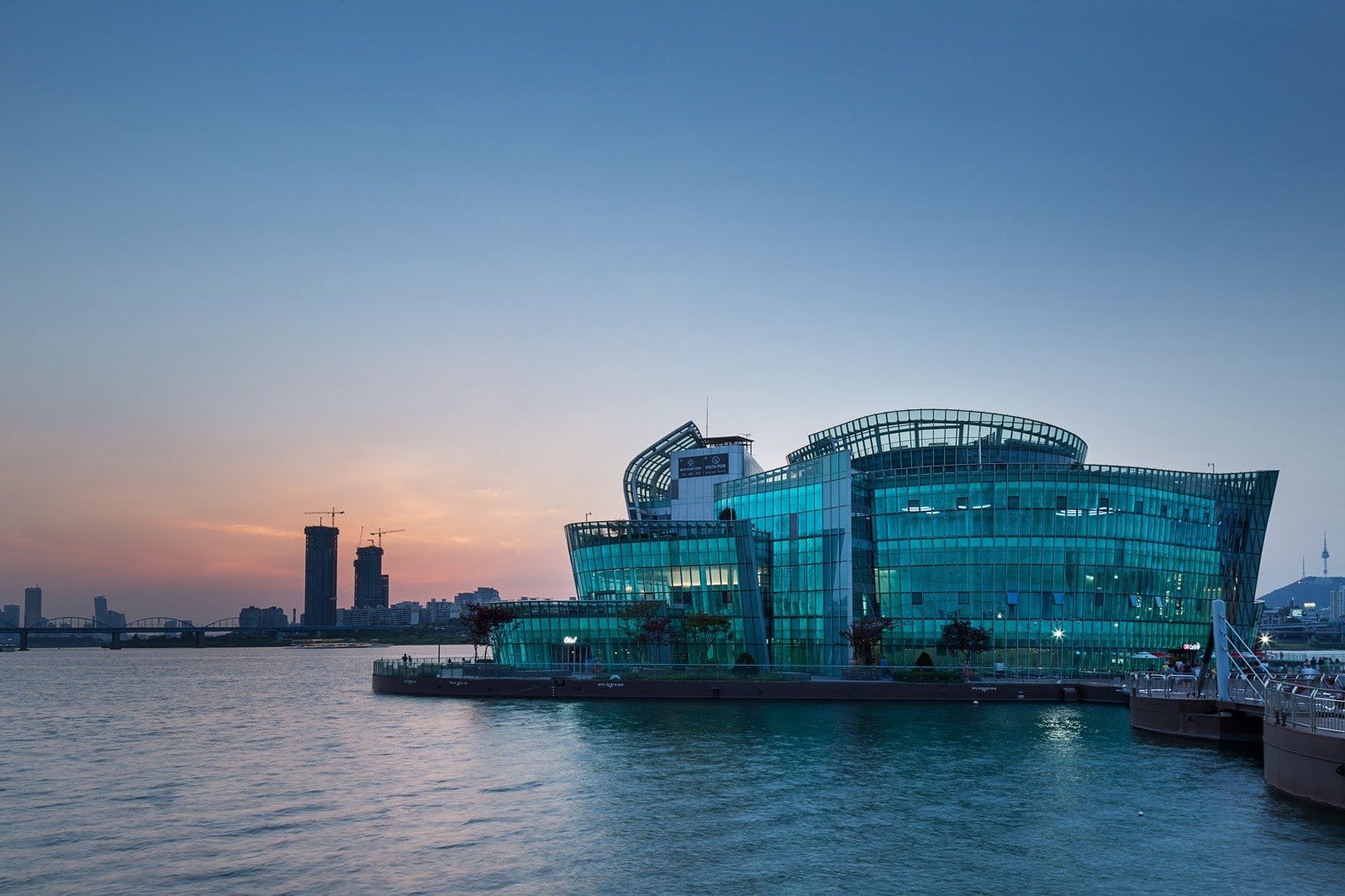
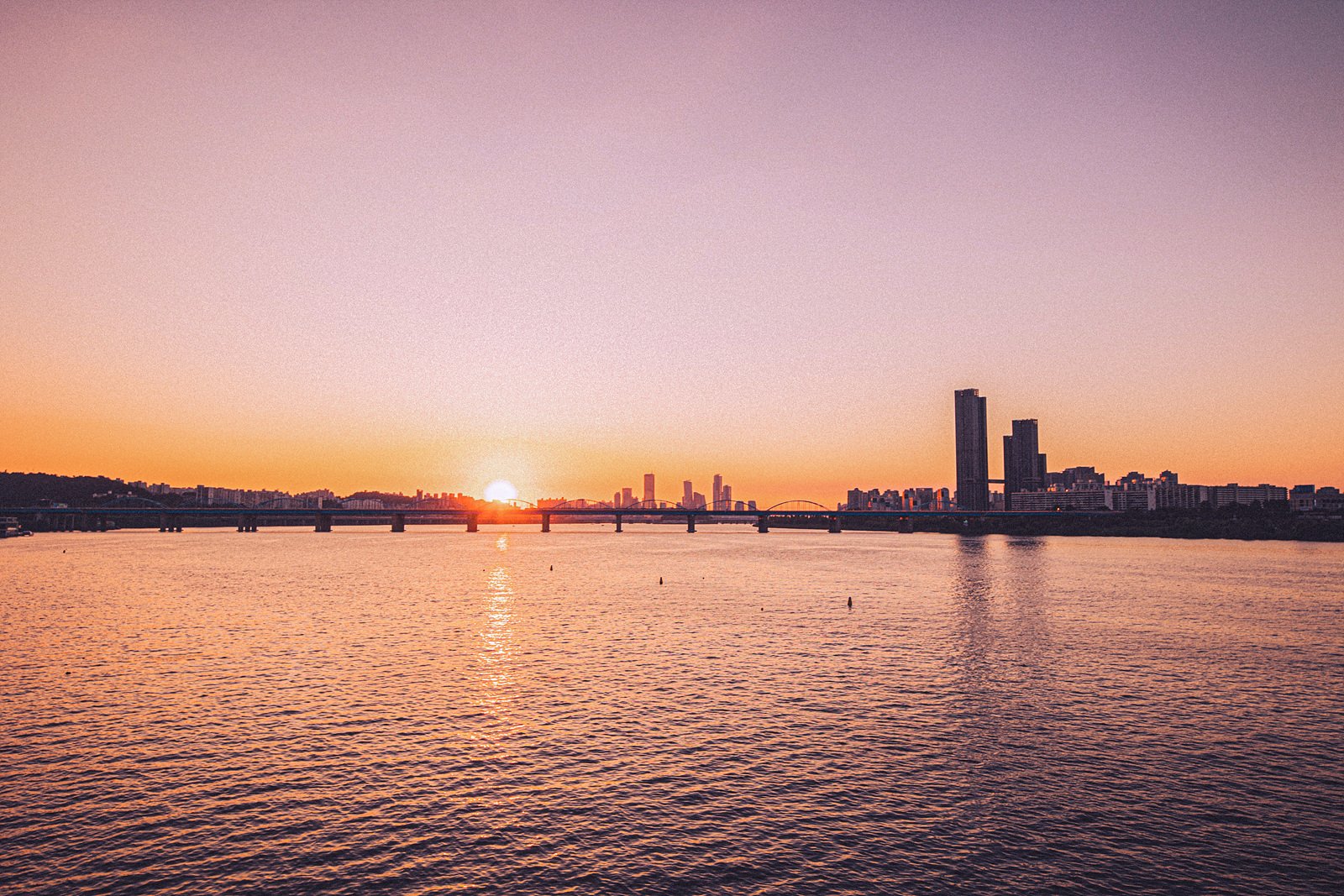
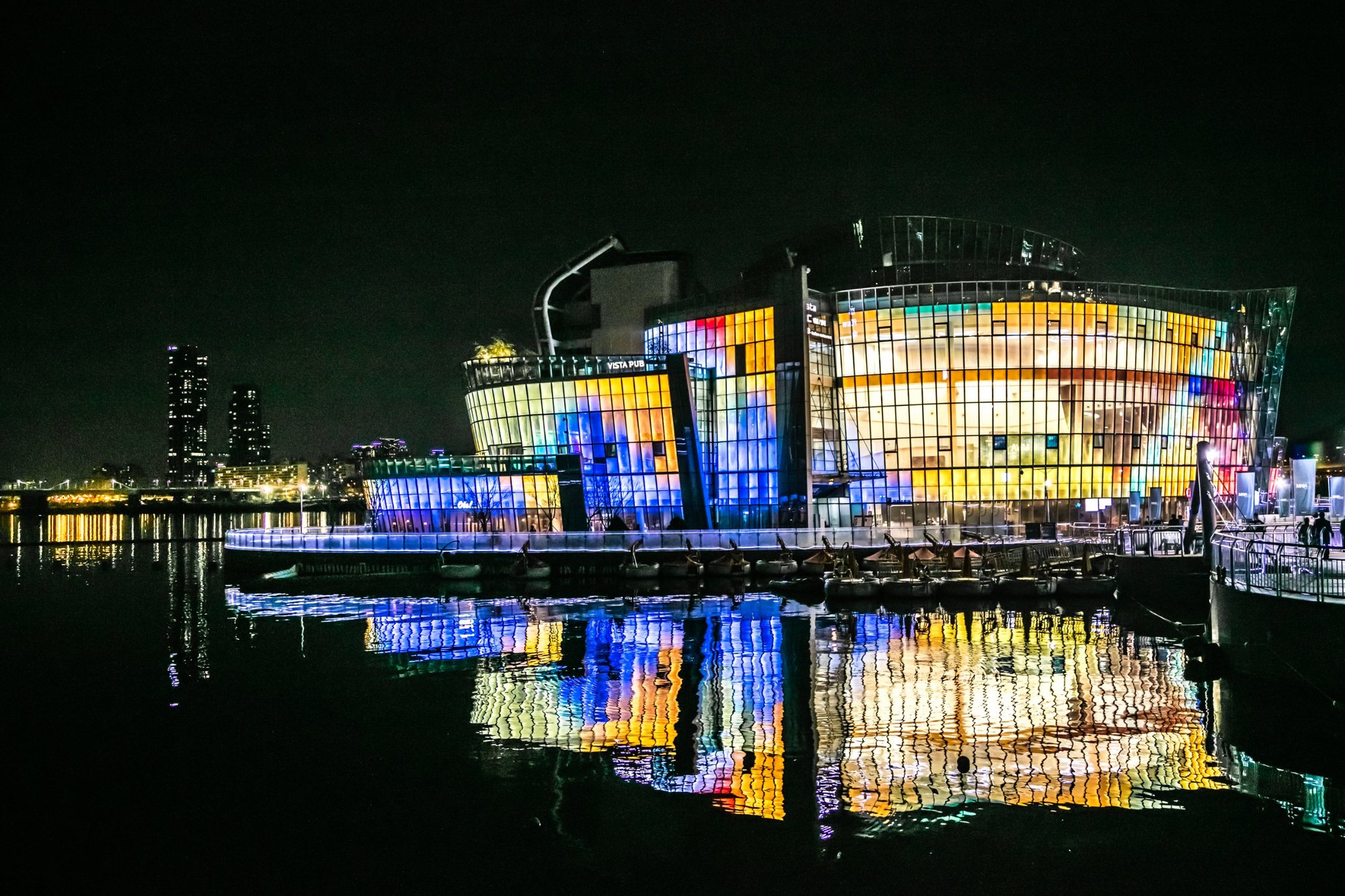
You do not have to travel to Europe to find these conditions. One wedding venue on the Han River in Seoul, for example, is a building that floats on the river, so every window looks onto water, and after sunset the bridge lights and the city skyline become the backdrop. Asking the six questions above on a site visit gives you a more accurate comparison than photographs.
Summary
- Europe's well-known venues are explained less by grandeur than by four conditions: backdrop, guest count, time and a rain plan.
- A château means using a whole house, a lake villa means a running order built around water, and a castle means indoor rooms ready for the weather.
- In Korea, check the view, the guest range, the length of the slot and the indoor alternative first.