
When the two sets of parents come from different countries, wedding planning first stalls at the running order. One side assumes the parents' entrance and formal greetings to both families are essential; the other thinks twenty minutes of ceremony is plenty and the party is the main event. Both are right. The problem is not the order but the structure.
The two cultures expect different things
A Korean wedding centres on the family. The parents enter, the two mothers light candles, the couple bows to their parents, and the pyebaek follows — many moments belong to the family, and the guests mostly watch. The ceremony usually lasts 30–40 minutes, and with the meal it is over in one to two hours.
A Western wedding centres on the couple and their guests. The ceremony is short, built around the vows and rings, and the reception — cocktail hour, dinner, toasts, first dance, party — runs for three or four hours. Guests are not spectators but participants.
Overseas surveys show the same split. In The Knot's 2026 Real Weddings Study, 61% of US couples wrote their own vows and 32% included religious, ethnic or cultural elements. The vows are the couple's words; the culture is the family's part.
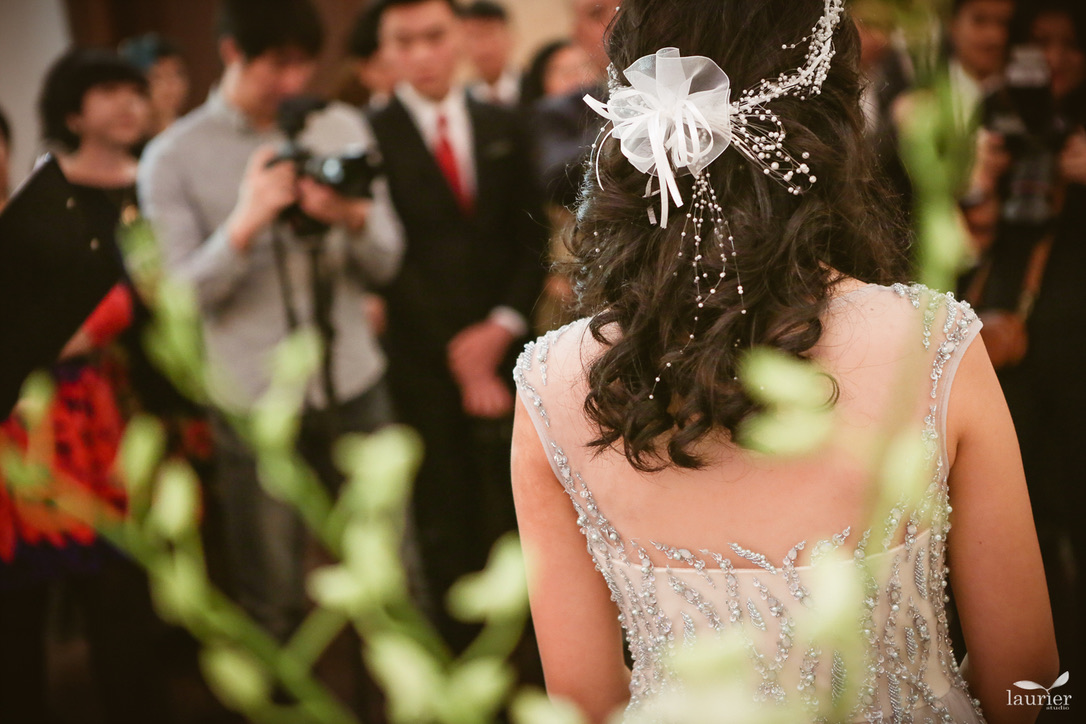
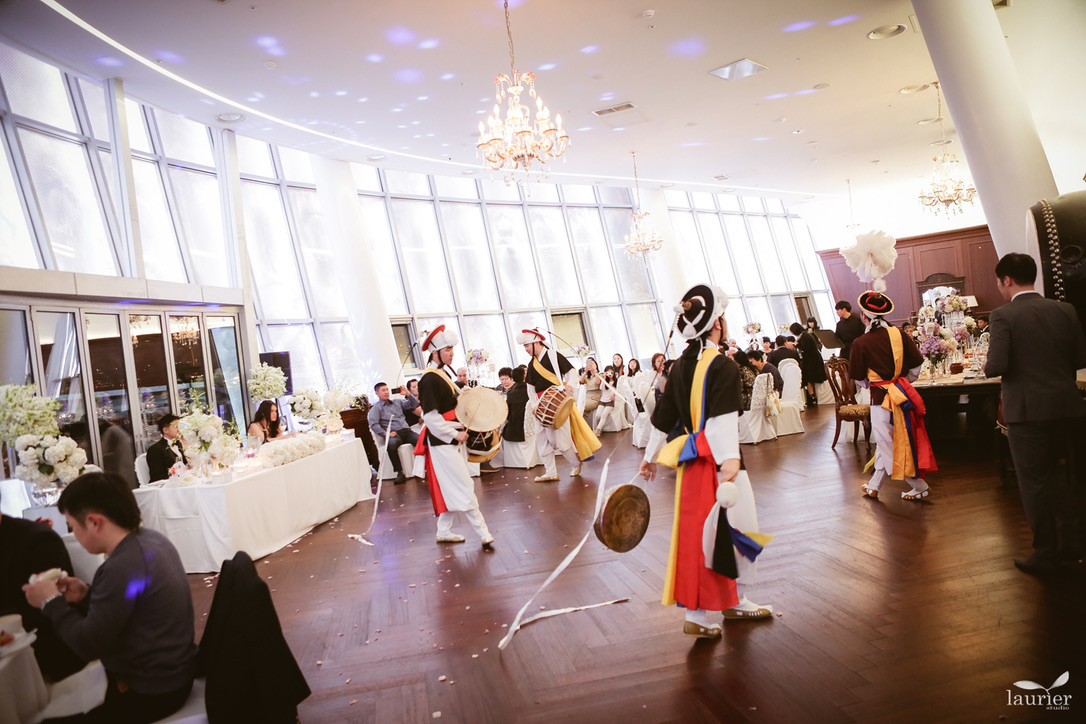
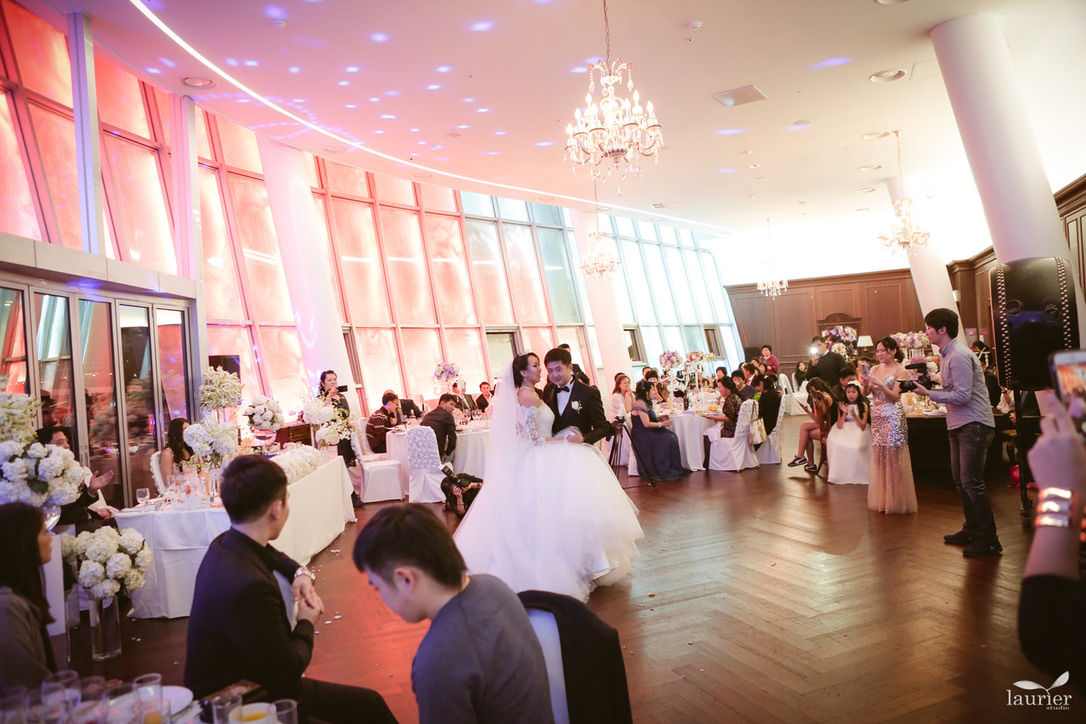
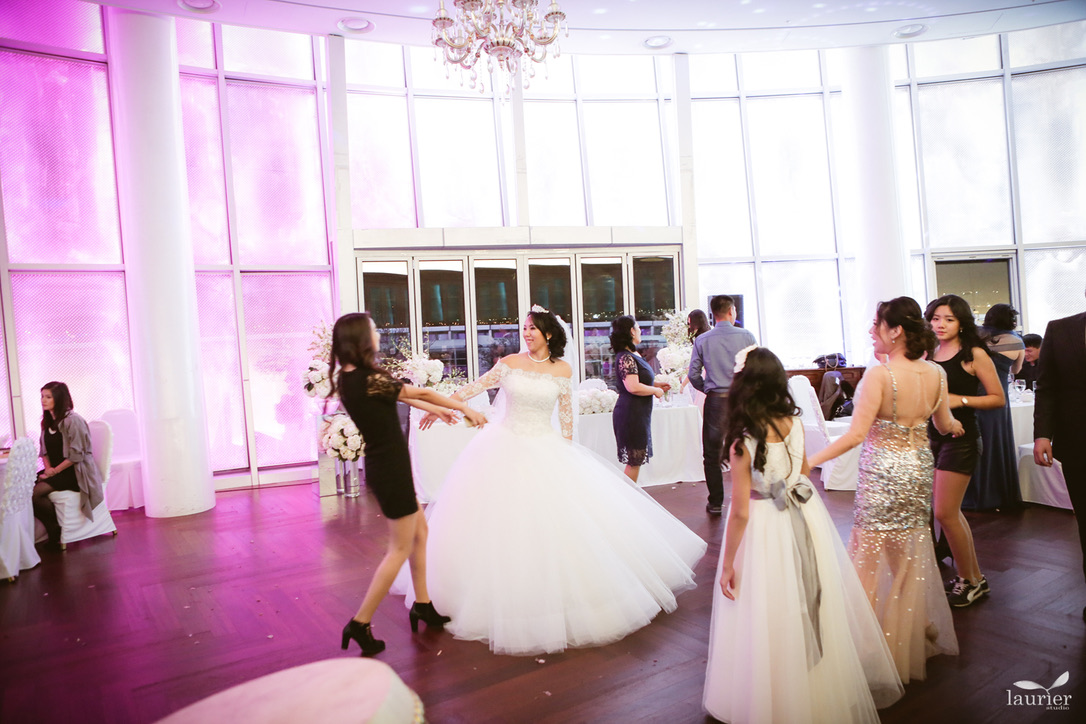
Where these photographs were taken: Villa de Noche, on the 2nd floor of the Sevit Island convention building. Villa de Noche takes bookings for Friday evening weddings only, and the running order and staging can be customised.
The answer: a formal ceremony, then a relaxed reception
Blend both expectations into one running order and both sides feel awkward. Instead, split the day in two.
Part one: the ceremony (40 minutes) — gather the formality Korean families expect here.
- Parents' entrance (both sets of parents entering together works well)
- Groom's entrance, then the bride's (with her father, or with both sets of parents)
- Vows: each in their own language, with subtitles or a short summary from the MC in the other
- Exchange of rings
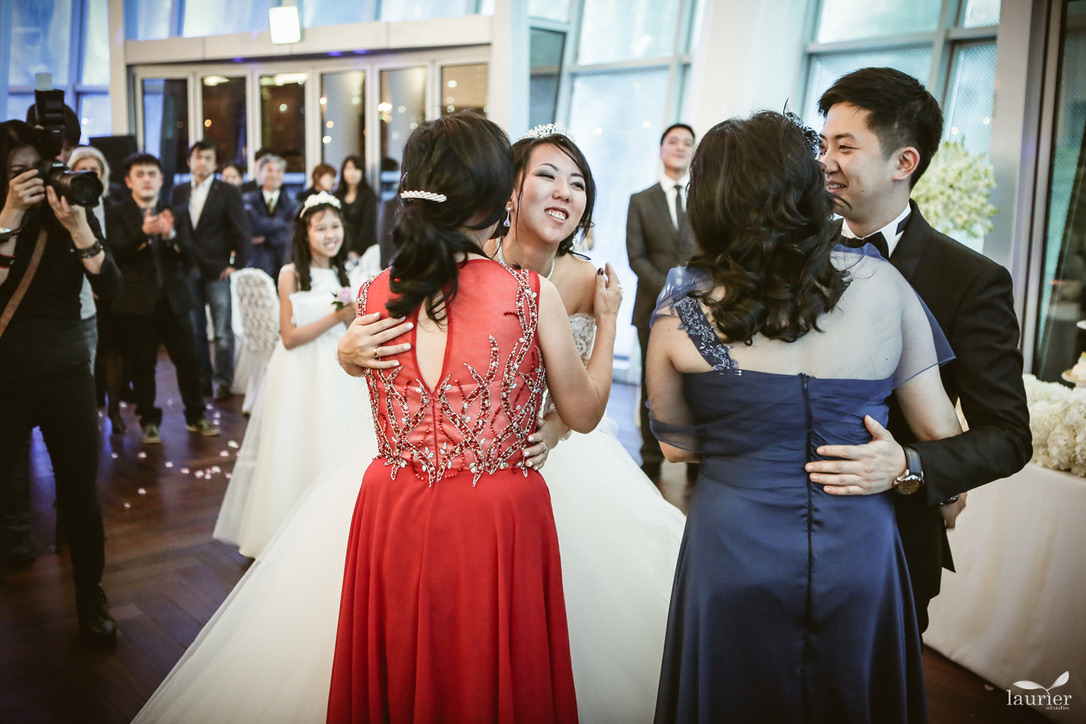
- Greeting both sets of parents — a Korean deep bow or a Western embrace, each in their own way
- Declaration of marriage, recessional
Part two: the reception (two hours or more) — the party overseas families expect goes here.
- Cocktail hour: guests move around and the two families are introduced to each other
- Dinner
- Two or three toasts (one from each side's family or friends, under three minutes each)
- Cake cutting, first dance or a dance with the parents
- After-party: music and free time
Divided this way, the Korean elders see the formal wedding they know in part one, and the overseas family enjoys the party they know in part two. Neither side gives up the wedding they know.
Languages: not both at once, but in turn
The most common mistake in a bilingual wedding is repeating every sentence in two languages. The ceremony doubles in length and the guests stop listening to half of it.
- One MC, two languages: announcements briefly in both; the emotional passages (vows, toasts) only in the speaker's own language.
- Print the programme in two languages: guests follow the flow without anything being repeated aloud.
- Vows in your mother tongue: handle translation in the programme or on screen. One added sentence in the other language is moving enough.
- Get translations of the toasts in advance and show them on screen. Live interpreting breaks the rhythm.
Food and drink should be ready as standard
Some guests may avoid alcohol and certain meats for religious or health reasons. Overseas trend reports name alcohol-free bars and plant-based menus as a 2026 trend; for an international couple it is not a trend but a premise.
- Are halal, vegetarian and allergy alternatives prepared at no extra cost?
- Are alcohol-free drinks ready for the toast as a matter of course?
- Is the menu card also provided in English?
What to check when applying this in Korea
This structure assumes you can hold the ceremony and reception back to back in one space, for three hours or more. Where weddings are scheduled one to two hours apart it can be hard to give part two enough time, so check the following when choosing a venue.
| What to check | Why it matters |
|---|---|
| Is the time slot generous? | The reception is not pushed out by the next wedding |
| Is the slot three hours or more? | 40 minutes of ceremony, two hours of reception, plus changeover |
| Can the couple set the running order and timetable? | Venues differ in how far the order can be adjusted |
| Is English or bilingual MCing available? | It changes who you need to hire |
| Are halal, vegetarian and alcohol-free standard? | You learn the cost and deadlines in advance |
| Transport for overseas guests | Shuttles from the airport or express bus terminal, coach parking |
For example, the Convention Hall at Sevit Island on the Han River in Seoul runs the ceremony and reception in the same hall over a generous three hours or more, with English-language coordination, halal and vegetarian alternatives and a shuttle from the Express Bus Terminal as standard. In a hall with those conditions, the two-part structure above carries over as it is.
Checklist
- Explained the "part one Korean formality, part two party" structure to both sets of parents first
- Decided which family moments (parents' entrance, candles, greetings) go in part one
- Vows each in our own language, translation in the programme or subtitles
- Chose two or three speakers from both sides and received their translations in advance
- Confirmed the venue offers a generous slot of three hours or more and a changeable running order
- Confirmed halal, vegetarian and alcohol-free alternatives are standard
- Sent overseas guests an English guide (accommodation, transport, dress code)