
The line couples planning an outdoor wedding say most often is "as long as the weather is good that day". Overseas planners answer the other way round: do not trust the weather to be good; plan first for when it is not. Drawing on outdoor wedding guides from The Knot and Zola in the US, here are the principles for season, time of day and rain.
Season: fewer months work for an outdoor wedding in Korea than you think
In Seoul, the comfortable months for an outdoor wedding are roughly mid-April to early June and mid-September to late October. Other months come with conditions.
| Period | Conditions | Preparation |
|---|---|---|
| March, November | Fine by day, but below 10°C once the sun sets | Outdoor heaters, blankets, a pre-agreed time to move indoors |
| Mid-April to early June | The most stable. Yellow dust in April, late rain in May | A wet-weather alternative is enough |
| Late June to August | Monsoon and heat. Daytime weddings are hard on guests | Evening ceremony, shade, cold water and fans, indoor reception |
| Mid-September to late October | The second peak. Large day–night swings, chilly evenings | Shawls and heaters; plan the order around sunset |
Overseas guides say the same. Zola's outdoor wedding guide recommends starting the ceremony outside the hottest, brightest hours of noon to 3 pm. It adds practical advice: provide fans, water and sunscreen for guests, and secure decorations and lighting where it is windy.
Time: plan backwards from sunset
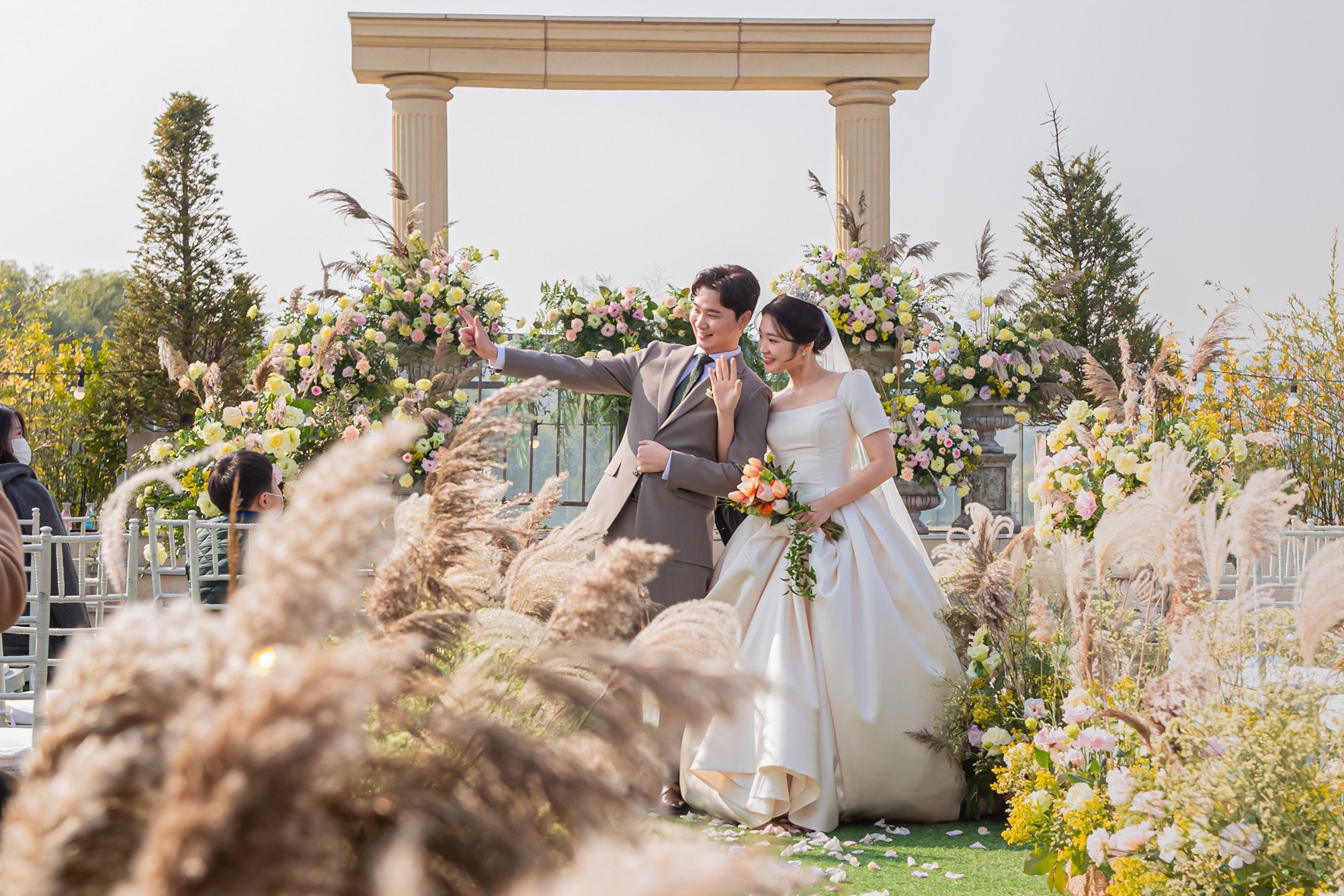
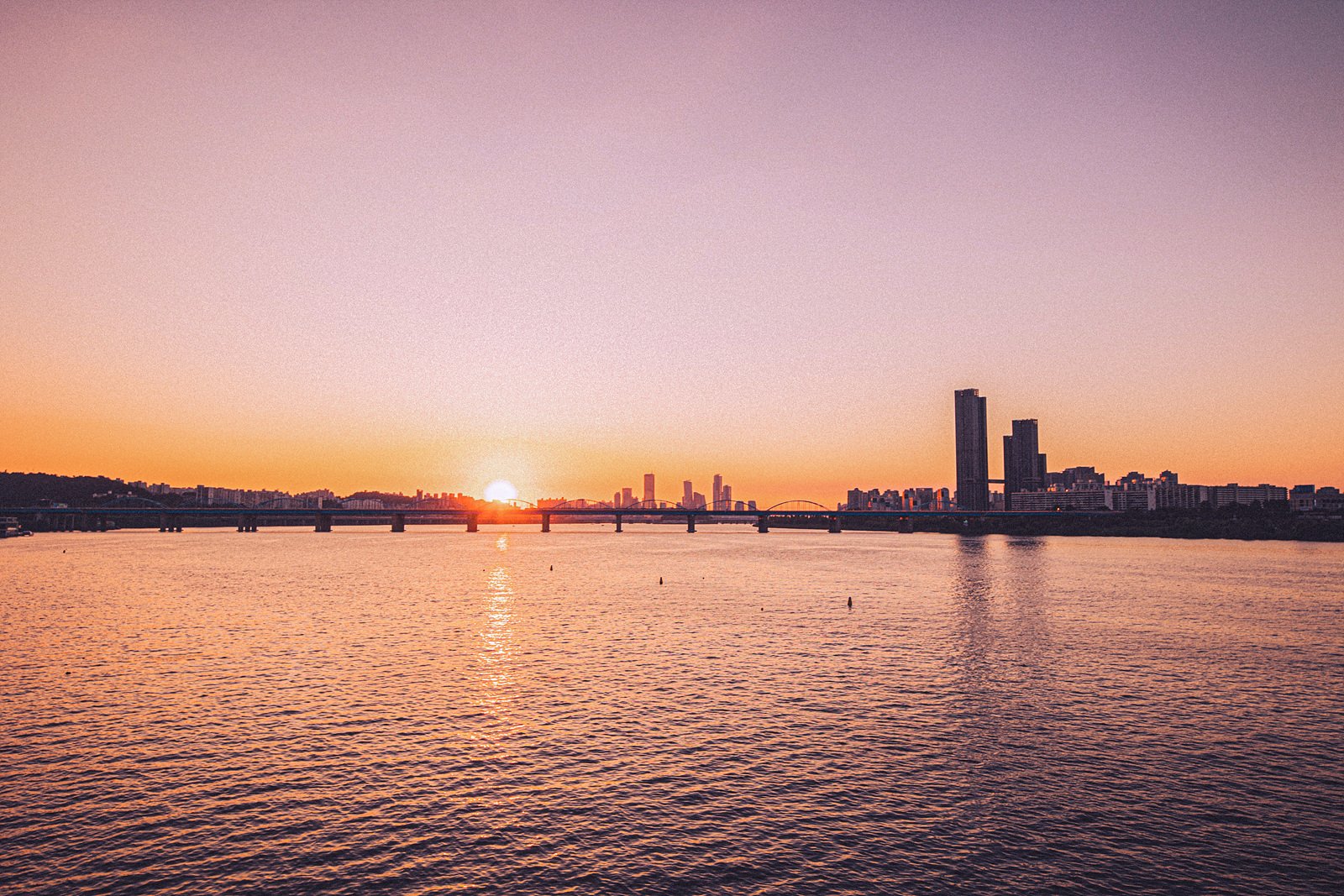
The running order of an outdoor wedding is set not from the start time but backwards from sunset. The best hour for photographs is the one before sunset (golden hour), and after dark the lighting makes the reception.
- Ceremony: starting 90 minutes to two hours before sunset
- Cocktails and photographs: the hour before sunset
- Dinner and party: after sunset, under the lights
Outdoor venues in Korea usually run two slots, daytime and evening (for example 12:00 and 18:00). In spring and autumn the evening slot puts the ceremony around dusk and the reception under the night view, which fits the structure above; the daytime slot is about avoiding the strong noon sun with shade and awnings. Either way, a slot needs to be three hours or more. It takes that much time to hold both golden hour and a party.
Rain: decide first when you will decide
In The Knot's outdoor wedding backup plan article, Seattle planner Hallea Tse says to have a plan B whatever the season or place, and Miami planner Jessyca Canal says that after watching a couple ruin their day by putting off the decision, she no longer lets couples delay it. The article recommends this sequence.
- Walk the rainy-day route on the site visit. Do not sign after seeing only the outdoor setting. Check the size of the indoor alternative, the distance and the extra cost on the spot.
- A tent is insurance. Check in advance whether tents are allowed, whether there is a designated supplier and what it costs. Overseas, tents can run to very large sums, so budget for one even if you never use it.
- Watch the forecast from ten days out and make the final call at noon the day before. The decision-makers are the couple, the planner and the venue coordinator, and once made it is not changed.
- You can split the decision. If ceremony and cocktails can stay outdoors while dinner and the party move inside, that helps when rain is due in the evening.
What to check when applying this in Korea
| What to check | Why it matters |
|---|---|
| Is the indoor alternative in the same building? | In the rain you cannot move guests to another building |
| Are the decision time and extra cost in the contract? | So you do not hear "indoors costs extra" on the morning |
| Does the venue own outdoor heaters and blankets? | Basic equipment for spring and autumn evenings |
| Is the slot three hours or more? | An outdoor wedding only makes sense if the order can follow sunset |
| Do power and sound reach the outdoor area? | Vows are often lost in the wind |
| Is the ground grass, decking or gravel? | It changes the bride's heels and the guest seating |
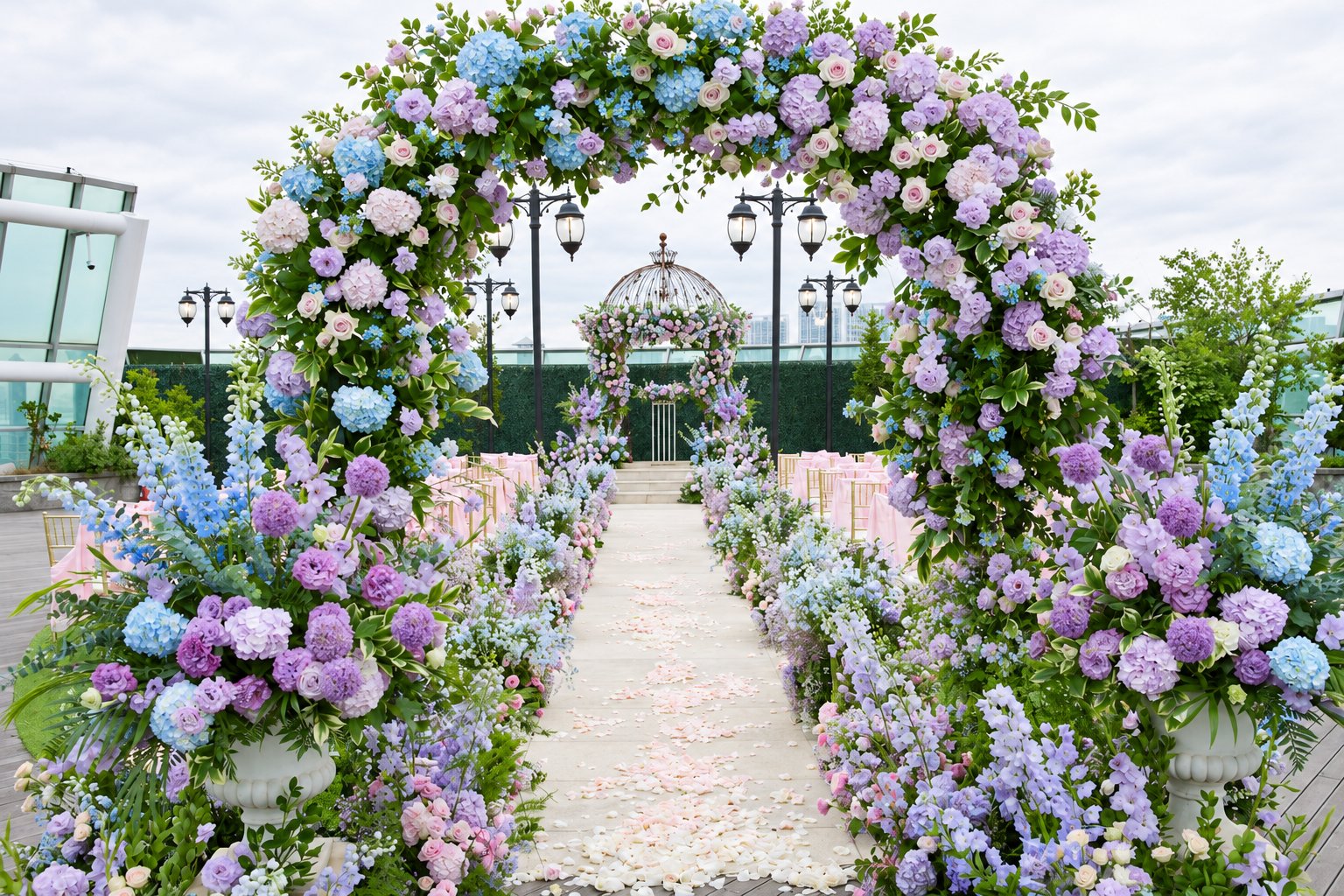
For example, the Marina Park garden on the Han River in Seoul can move to the indoor halls on the second and third floors of the same building if it rains, and keeps its own outdoor heaters, so on the site visit you can settle in advance which hall you would move to. At any venue, asking that question in advance takes much of the worry out of the weather.
Summary
- The outdoor season in Seoul is mid-April to early June and mid-September to late October. Other months need heaters, shade or a move indoors.
- Plan backwards from sunset. For the evening slot, start the ceremony 90 minutes to two hours before; for the daytime slot, prepare for direct noon sun.
- A rain plan is not "will it rain" but "when, who and where".
- The one sentence to ask the venue: "If it rains, where do we go, when do we decide, and how much more does it cost?"