
The appeal of a rooftop wedding is plain. The sky is open, the city and the river are the backdrop, and the photographs look full without many flowers. In return you have to think about things a ground-floor hall never asks of you. Drawing on rooftop wedding guides from The Knot and Giggster, here is the preparation in four parts. (As of December 2026)
Timing: set the running order by the sunset
On a rooftop the position of the sun is your lighting. In The Knot's guide to rooftop weddings, Los Angeles planner Samantha Kin recommends mapping where sunlight falls on the space during both the ceremony and the reception. The same spot has different light at three o'clock and at six.
- Visit at the same time of day as your ceremony. Check whether the sun falls directly on the guest seating and whether the couple will be backlit.
- For an evening wedding, hold the ceremony before sunset and the reception after dark, against the night view.
- For a daytime ceremony in warm months, arrange shade, parasols and fans.
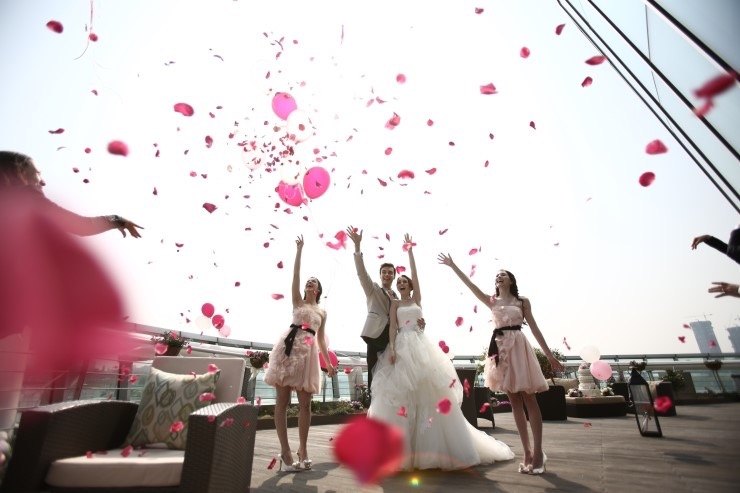
Wind and noise: light things fly, quiet voices are lost
Wind is stronger at height. Kin advises against light paper signage and place cards. Giggster's rooftop wedding guide likewise notes that candles blow out and decorations move, and suggests secured or weighted decor and asking whether there is a windbreak or sheltered area.
- Keep flowers low and heavy instead of tall. This also keeps the view clear.
- Use candles with glass covers, or LED candles.
- A long veil is beautiful in photographs but needs securing in strong wind.
- Always use a microphone for the vows. In wind and city noise an unamplified voice does not reach the back row.
Consider noise in both directions. Listen for sound coming in (traffic, neighbouring events) on your visit, and ask about rules on sound going out. Giggster points out that city rooftops often have an earlier cut-off for sound, so ask for the time first.
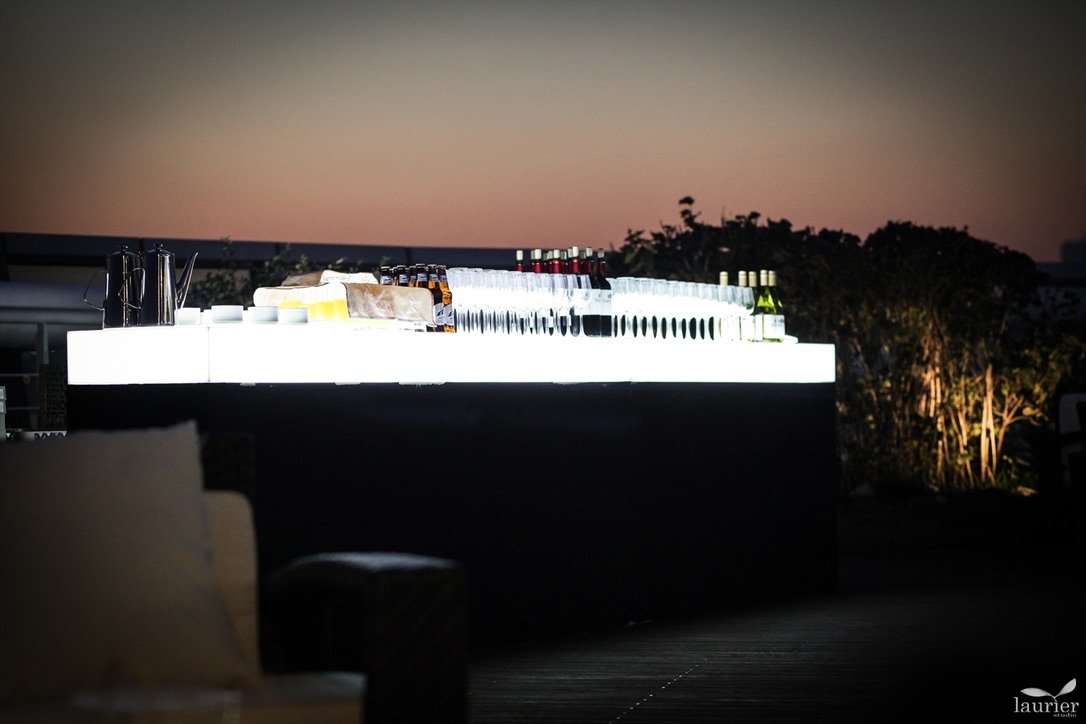
Power and lighting: prepare for after sunset
After sunset a rooftop gets dark quickly and the temperature drops. Giggster's checklist includes:
- Whether there is enough power for sound, lighting and catering equipment, and a backup supply in case it fails.
- Whether lighting is included in the hire, and whether you can change it.
- Whether there are heaters or fans for the season.
- How quickly the surface dries after rain. A wet floor is a hazard for guests.
With lighting, what you leave dark matters as much as what you light. If the night view is your backdrop, stage lighting that is too bright will erase the city behind you in the photographs. Ask your photographer and the lighting operator to agree on levels in advance.
Moving indoors: fix the decision day first
A rooftop has no roof. The Knot's guide recommends making the weather decision in the week of the wedding and planning in advance for a tent, or for moving all or part of the event indoors. Giggster adds that you should review the weather plan with your vendors about two weeks ahead.
- See the indoor alternative yourself on the site visit, and check that it is in the same building.
- Agree at contract who decides, and when.
- Ask whether a partial move is possible, for example the ceremony on the roof and dinner indoors.
- Get a drawing of how decor and seating change if you move.
Access and safety
- Whether older guests and wheelchair users can reach the roof by lift, and whether restrooms are nearby.
- Whether the lifts can cope when guests arrive at once.
- Whether vendors have a separate route and time for bringing up equipment.
- Whether the railings are high enough, especially if children are attending.
- The capacity of the roof, and weight limits for large installations.
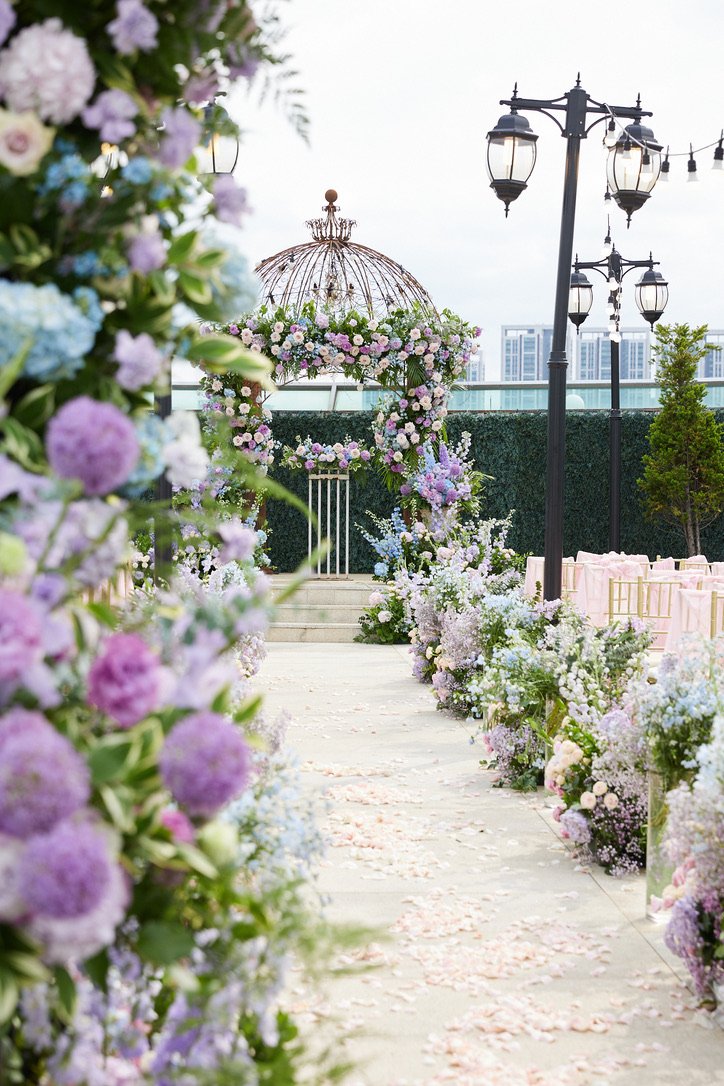
What to check when applying this in Korea
| What to check | Why it matters |
|---|---|
| The direction of the sun at ceremony time | Avoids direct sun on guests and backlighting |
| The cut-off time for sound | This sets when the party ends |
| Power capacity and whether lighting is included | Decides the mood and safety after dark |
| Heaters, shade and blankets | Standard for spring and autumn evenings and summer days |
| The indoor space and decision time if it rains | It has to be in the same building for guests to move |
| Lifts and equipment access | Guest arrival and vendor set-up should not overlap |
| Whether the slot is three hours or more | Sunset and the night view both need time |
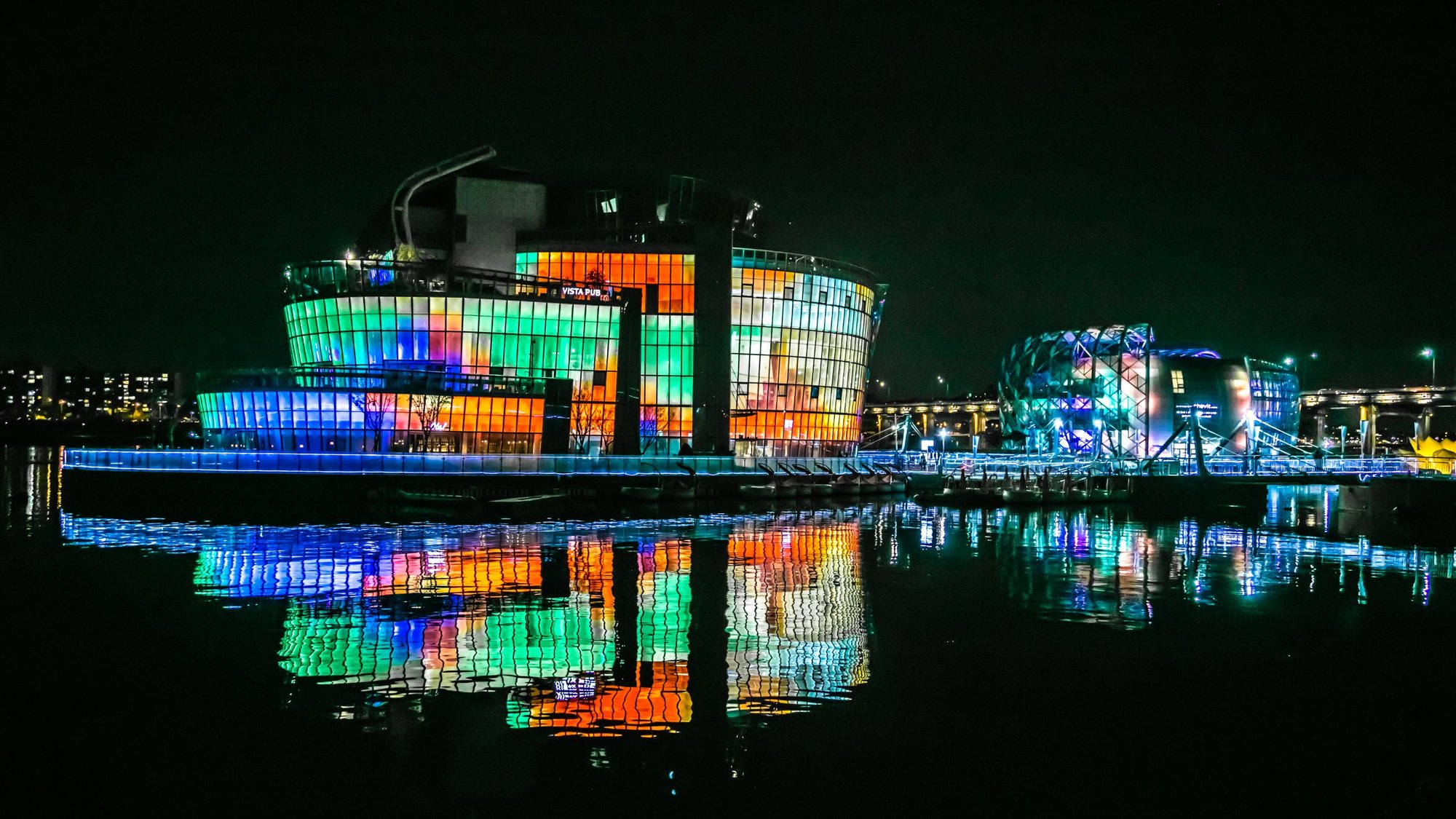
The rooftop garden of one wedding venue on the Han River in Seoul, for example, is open to the river, the bridge and the city lights on every side, and if it rains the wedding moves to an indoor hall in the same building. Whichever rooftop you are considering, use the table above as your list of questions.
Summary
- Visit at the same time of day as your ceremony. The direction of the sun decides seating and photographs.
- Avoid light decorations, and use a microphone for the vows.
- Check power, lighting and heating, and set lighting levels so the night view stays in the photographs.
- For the move indoors, agree the space, the person who decides and the decision day at contract.