
A bride may spend months on the dress, while the groom's outfit is often settled in a single visit. Yet in every photograph the groom stands next to the bride. Knowing where the tuxedo came from and which details change its character makes even a short fitting precise.
Origins: from a London tailor to Tuxedo Park
According to Wikipedia's entry on Black tie, the dinner jacket dates from 1865, when the Savile Row tailor Henry Poole & Co. made a short evening jacket in midnight blue for the Prince of Wales, later Edward VII. It was a comfortable alternative to the tailcoat for private dinners.
The name "tuxedo" was added in America. The widely told story is that in October 1886 Griswold Lorillard appeared at the Autumn Ball in Tuxedo Park, New York, in a tailless jacket, and the village gave the garment its name. A jacket designed to relax the dress code is now the most formal thing most men will ever wear.
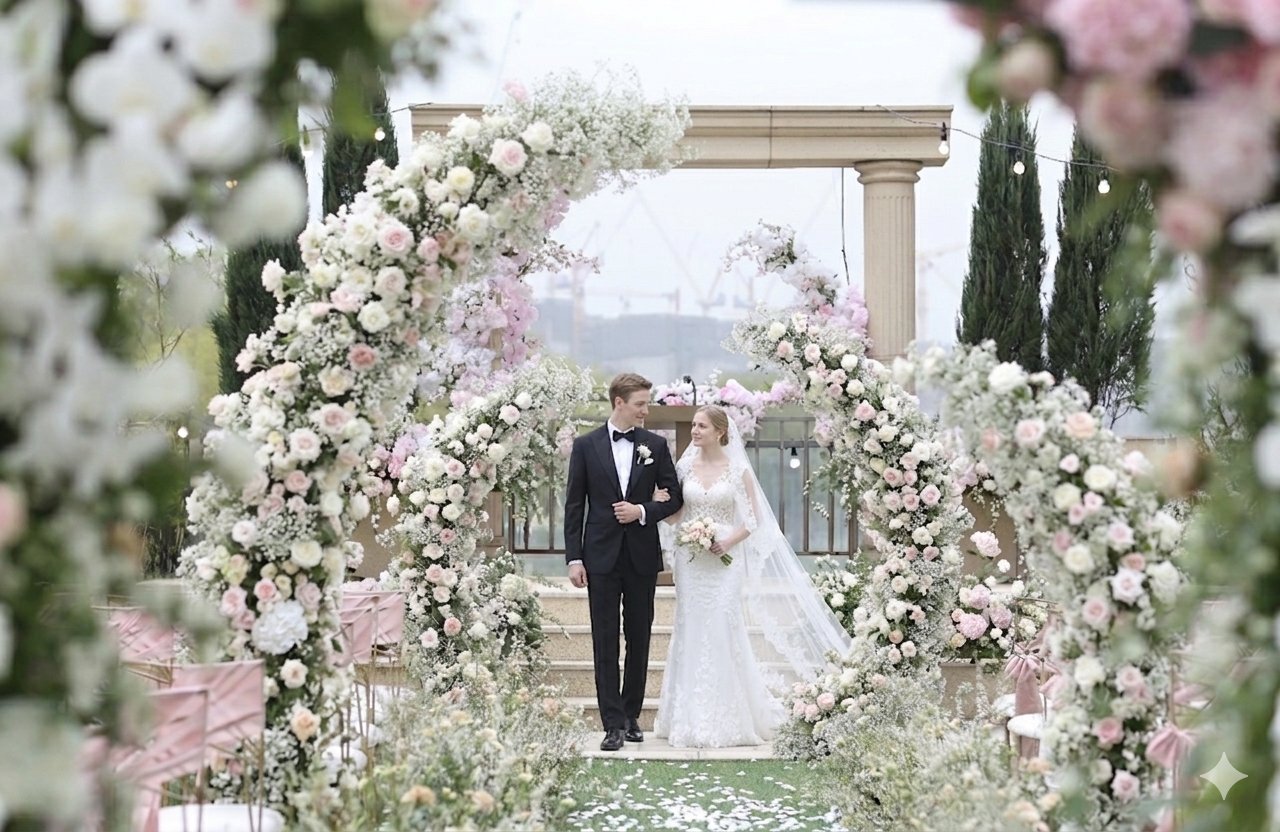
Design: three things that change the impression
Lapels
| Type | Shape | Works for |
|---|---|---|
| Shawl | One continuous rounded line | A soft, classic look and evening ceremonies |
| Peak | Points rising towards the shoulder | Broader shoulders, higher formality, large halls |
| Notch | The V-shaped notch of an ordinary suit | The safest choice, but the least formal for a tuxedo |
Colour
Black is the default, though the first dinner jacket was midnight blue. The same entry explains that midnight blue has been chosen because under artificial light it reads as a deeper black than black itself. The ivory jacket is a variant for warm weather and outdoor settings.
Components
A black bow tie, a white dress shirt, a cummerbund or waistcoat covering the waist, trousers with a braid down the side, and polished black shoes make up the set. A long tie and a belt are not part of formal black tie.
Choosing for the venue and the hour
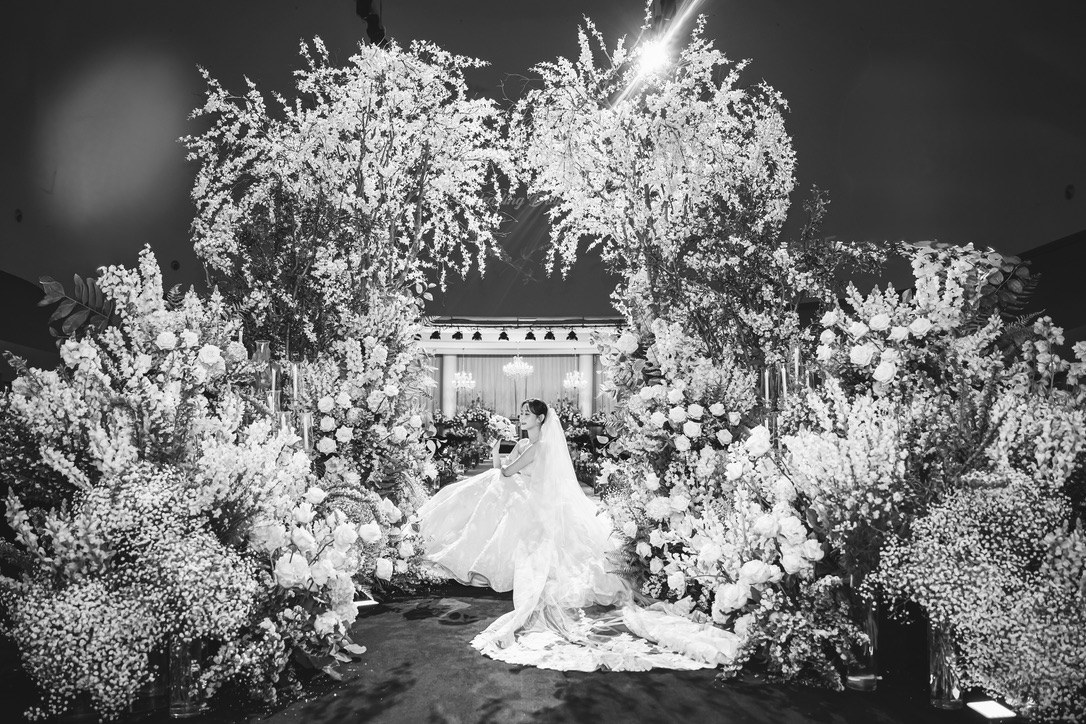
- Large indoor hall, evening: black or midnight blue with a peak lapel. The outline stays clear under stage lighting.
- Garden, daytime: ivory or light grey with a shawl lapel. Black can look heavy in sunlight.
- River or window backdrop, sunset: midnight blue, which holds its colour against both the sunset and the night view.
- Small dinner: a velvet jacket or a dark suit works well. Guests sit close enough to see the texture.
Balance with the bride's dress matters as well. Match the shirt to whether the dress is pure white or ivory. If the dress is elaborate, keep the groom simple. If the dress is simple, add one point of interest in the lapel or the fabric.
What to check when applying this in Korea
| What to check | Why it matters |
|---|---|
| Made-to-measure or rental, and the lead time | Tailoring needs fittings, and popular rental sizes book out early |
| Whether you can see it next to the bride's dress | The tone and sheen of the whites are matched side by side |
| The venue's lighting and background colour | The same black looks different under LED light and daylight |
| The time of the ceremony | A daytime garden and an evening hall call for different colours |
| Whether shoes, bow tie and shirt are included | A missing accessory is the most common problem on the day |
| How much can be altered | Sleeve and trouser length show immediately in photographs |
Asking the shop where the dress was chosen about the tone of the groom's outfit is the quickest way to make the two work as one picture.
Summary
- The tuxedo began as a London dinner jacket in 1865 and took its name at Tuxedo Park, New York, in 1886.
- Lapel, colour and components decide the impression.
- Choose according to the size and lighting of the venue, the hour of the ceremony and the tone of the bride's dress.