
Most couples start a budget sheet by writing an amount next to each item. Then every new quote shakes the whole sheet. Overseas guides recommend the opposite: treat the total as 100, set the share of each category first, and fill in the amounts later. This article deals only with proportions and order, not amounts.
Category shares in overseas data
The Knot's budget guide, based on what US couples actually spent, gives these shares.
| Category | Share |
|---|---|
| Venue | 29% |
| Food and drink | 24% |
| Photography and video | 10% |
| Flowers and decor | 9% |
| Music | 6% |
| Attire | 6% |
| Rings | 5% |
| Planner | 4–5% |
| Entertainment | 3% |
| Transport | 2% |
| Stationery | 1% |
| Officiant | 1% |
Venue and food together are more than half. However much you trim elsewhere, once these two are fixed the outline of the budget is fixed.
What changes for a wedding in Korea
The US proportions cannot be copied directly, because the structure is different.
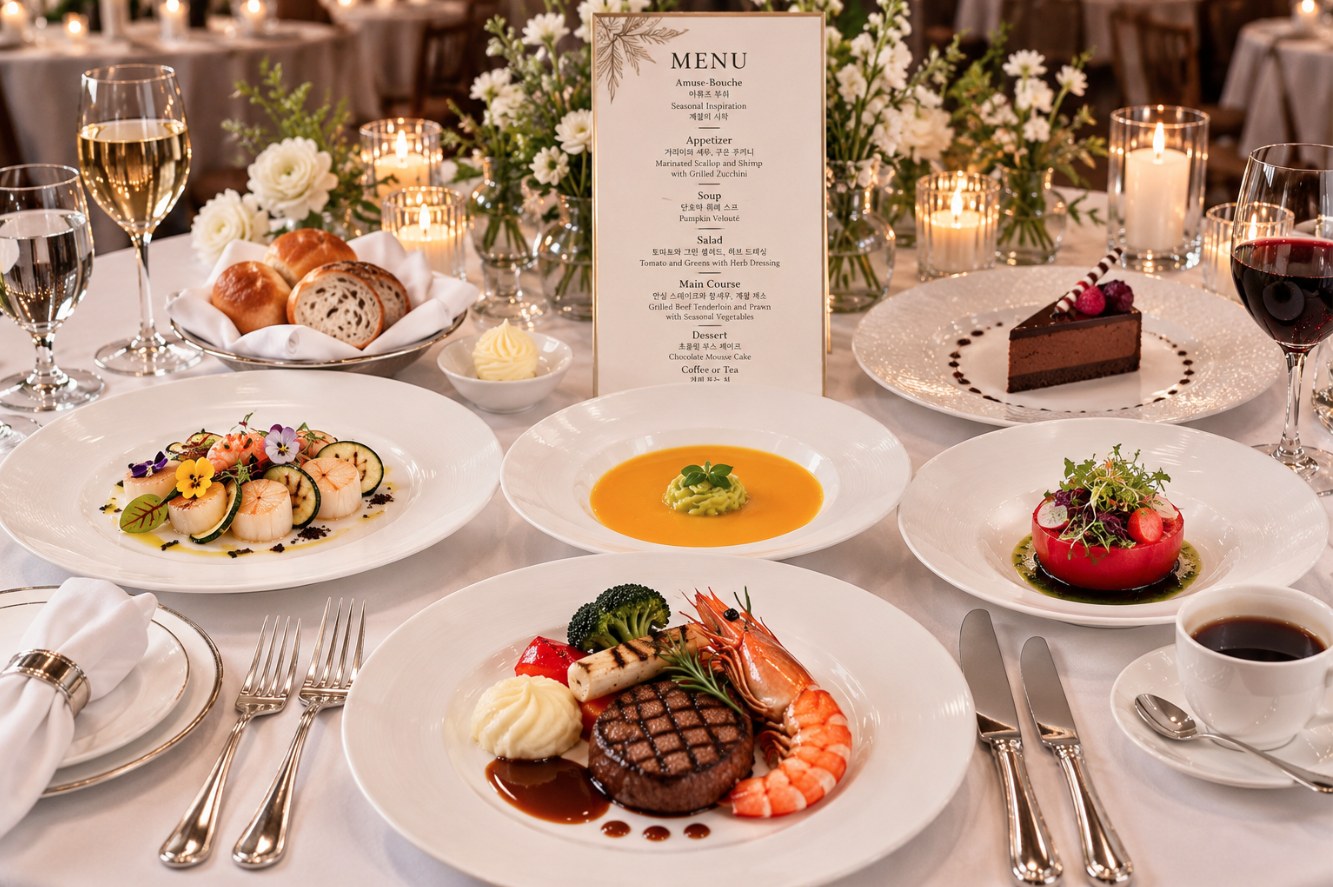
- Food takes a larger share. Guest lists in Korea are long and the meal cost rises with each guest, so venue and food together often come out higher than in the US.
- Hall fee and meals are bundled. Many venues quote the hall, the meal and basic staging on one sheet. To see the categories you have to read the quote line by line.
- The planner line is different. Where an overseas budget has a planner, a Korean one usually has a studio, dress and make-up package.
- The guaranteed number is the basis. Meals are charged on the guaranteed number in the contract, not on actual attendance.
The reserve: set it aside at the start
The Knot advises keeping at least 5% for unforeseen costs, and Joy's guide to budget percentages suggests 5–10%. We recommend 10%. In a Korean wedding quite a few items appear late: changes to the guaranteed number, extra meals on the day, additional flowers, overtime.
A reserve is not money left over. It is a line you set aside first. If the total is 100, plan with 90 and leave 10 untouched.
The order: choose your three priorities first
The method in The Knot's guide is for each of you to write down the three categories that matter most. Give more to the ones that overlap and cut from the ones that do not.
- Set the ceiling for the whole budget. If families are contributing, confirm how much and when.
- Set aside the 10% reserve.
- Choose three priorities.
- Get quotes for venue and food first. The other proportions follow from these two.
- Compare quotes on the final figure, with tax and service included. Joy's guide makes the same point about all-in prices.
- Update the sheet every time you sign a contract.

What to check when applying this in Korea
| What to check | Why it matters |
|---|---|
| Whether VAT is included in the quote | The total differs by 10% |
| The minimum guarantee, and how over and under are charged | Meals are charged on the guarantee, not on attendance |
| What the hall fee includes and excludes | How far flowers, sound, video and staging are standard |
| Differences by weekday, season and time | The same hall has different terms on different dates |
| Deposit, balance and cancellation terms | Put the payment dates into your calendar |
| What triggers overtime or extra charges | This is where the reserve is actually spent |
Some venues now offer a self-quote page that shows the figure for each line as soon as you choose a date, a guest count and options. Having your percentage table ready before you ask for quotes makes the numbers much easier to compare.
Summary
- Build the budget in percentages before amounts. Venue and food are more than half.
- In Korea the food share is larger, and the guaranteed number is the basis of the calculation.
- Set aside a 10% reserve at the start, and compare quotes on the final, tax-inclusive figure.
Sources
- The Knot, The Wedding Budget Breakdown You Need, Backed By Data
- Joy, Wedding Budget Breakdown by Percentage