
Ask guests how a wedding was and they usually start with the food. The meal is where guests spend the most time, and at an international couple's wedding it is where guests of different religions and diets sit at one table. Based on overseas guides, here is how to choose a service style and prepare alternative menus. (As of November 2026)
Choose the service style first: plated, buffet or family style
Before the menu, decide how the food is served. The style changes how long the meal takes and how the running order fits. These figures come from a comparison by the Australian wedding publication Paperlust.
| Style | Time | Serving staff | Suits |
|---|---|---|---|
| Plated | 90–120 minutes, 20–30 per course | 1 per 8–10 guests | Fitting toasts between courses; many older guests |
| Buffet | 60–90 minutes (30–45 more in queues without table-by-table release) | 1 per 40 guests | 150 or more; guests with varied tastes |
| Family style (platters on the table) | 75–105 minutes | 1 per 12–15 guests | 50–150; a wedding built on conversation |
The strength of plated service is that the timing is predictable. A toast fits between starter and main, the cake between main and dessert. A buffet offers more choice, but unless tables are released in turn, the queue pushes the running order back.
The courses: three as standard, a first bite as the first impression
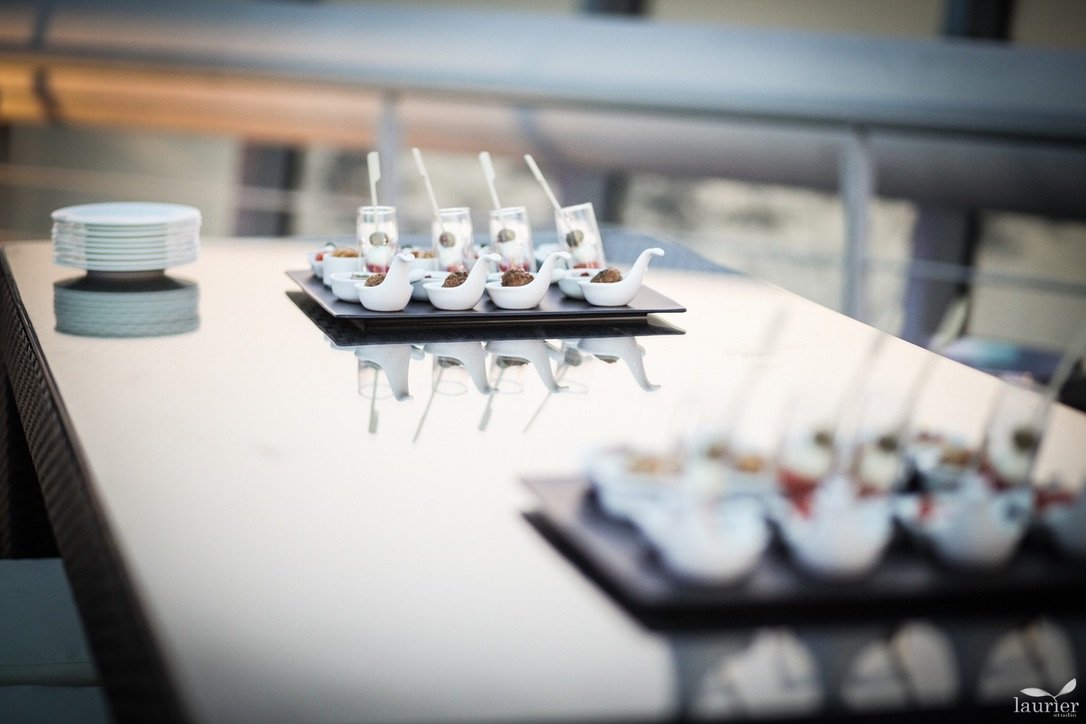
The skeleton of a Western wedding meal is starter → main → dessert. Add canapés and welcome drinks beforehand and the meal has begun before guests sit down.
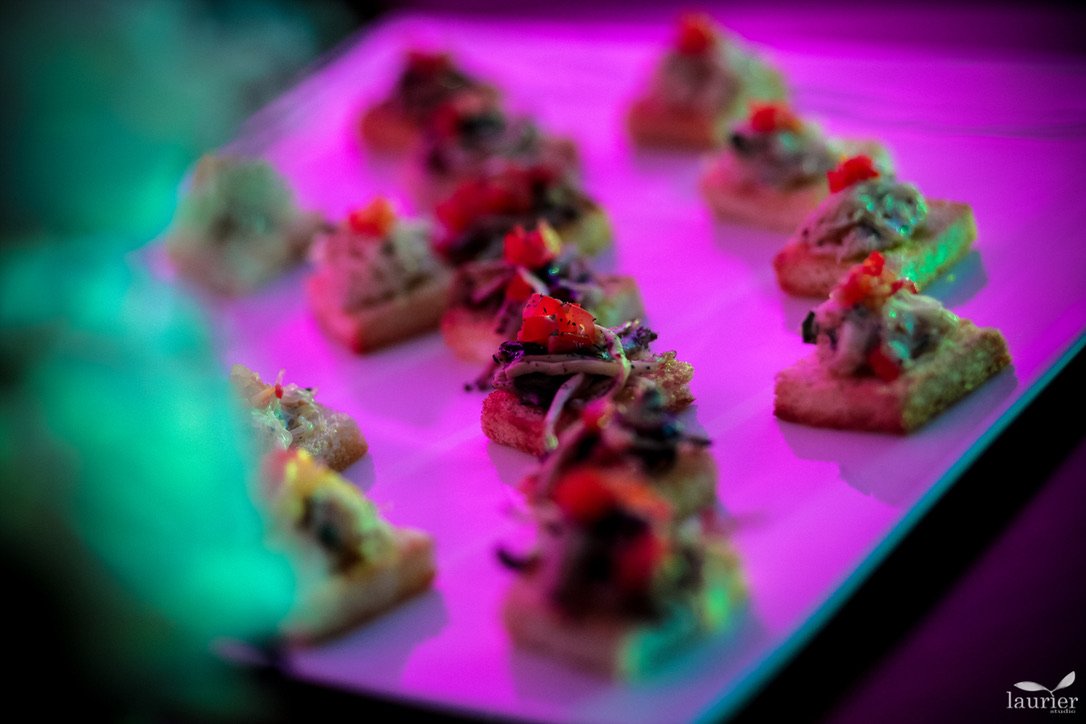
- Canapés (30–60 minutes): sized to eat standing with one hand. They keep guests from waiting during the photographs after the ceremony.
- Starter: light and cold. A salad or soup that can reach every table at once is safe.
- Main: meat or fish, or both on one plate. Prepare a separate vegetarian main.
- Dessert: decide whether the wedding cake is the dessert or a separate one is served.
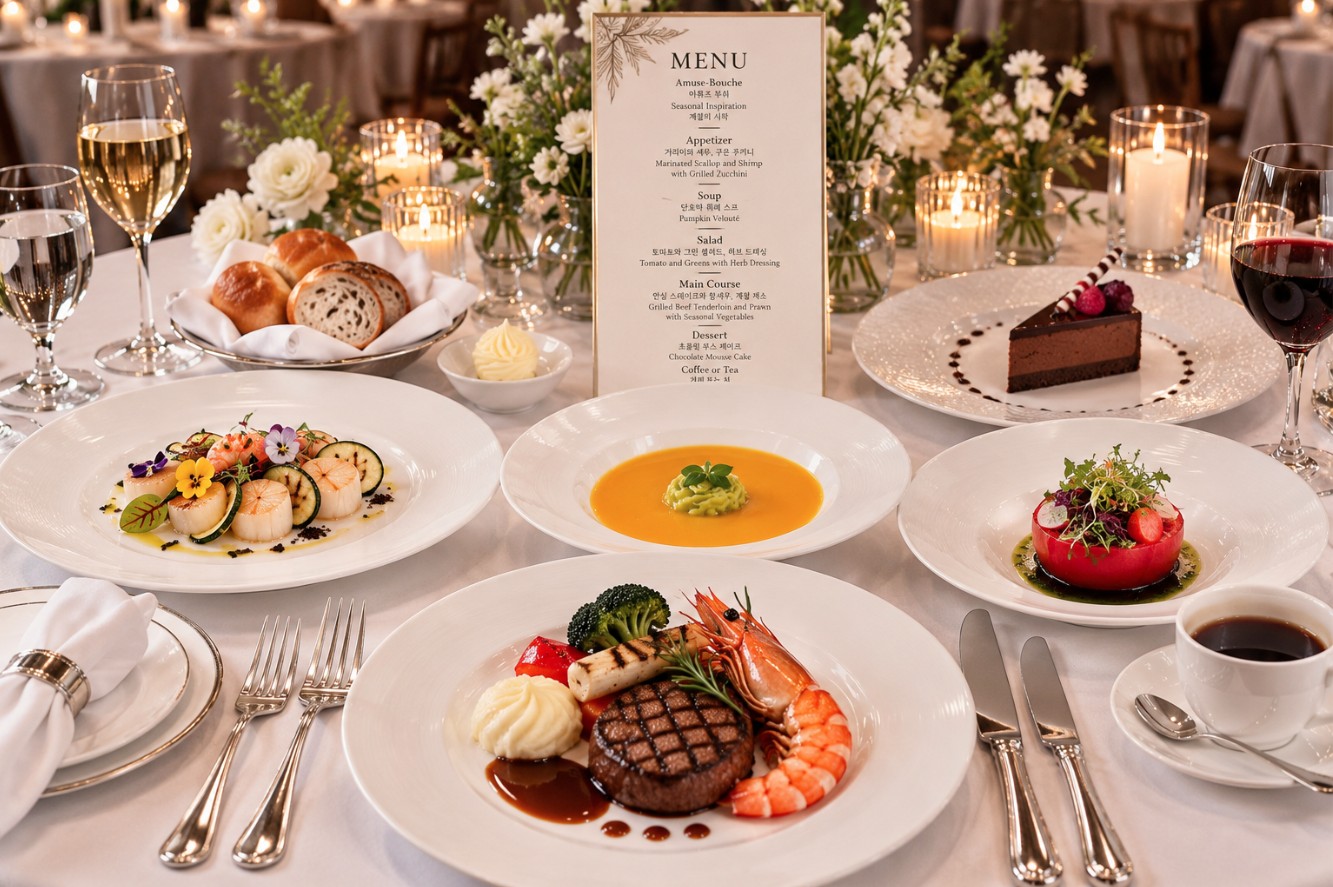
With many Korean guests, adding one familiar dish such as banquet noodles or rice cake makes a real difference to older guests.
Ask about diets with the reply
The US wedding publication Loverly's guide to dietary restrictions keeps the method simple: add one line to the reply form. Let guests choose meat, fish or vegetarian, and below it ask them to list any other dietary restriction.
Once you know several guests have restrictions, it advises telling the caterer (the venue) straight away. An experienced kitchen already has alternatives, and the earlier it knows, the wider the choice.
A line for a mobile invitation:
To help us prepare your meal, please tell us: □ Standard □ Vegetarian □ Halal □ Allergy (please specify)
Halal, vegetarian, allergies: the principles for alternatives
Zola's guide to vegetarian wedding menus starts by separating the terms. Vegetarians avoid meat but eat dairy and eggs; vegans avoid all animal products; pescatarians eat seafood. It points out that these choices and allergies are different matters, and recommends including a few meat-free dishes even if the whole menu is not vegetarian.
- Vegetarian main: a dish that is a main in its own right — risotto, mushroom ravioli, roasted vegetables — not a plate with the meat removed.
- Separate cooking: fry vegetarian dishes in oil kept separate from that used for meat. The same principle applies to a halal diet.
- Halal: no pork and no alcohol is the starting point. Check with the kitchen for alcohol and gelatine in sauces and desserts, and ask the venue whether certified ingredients are used.
- Allergies: for a buffet, Loverly recommends labelling every dish and keeping allergens apart in both kitchen and serving line — dishes with nuts at the opposite end from those without.
What to put on the menu card
A menu card is not decoration but guidance. For an international couple, print it in two languages with small symbols beside each dish for vegetarian, halal and nuts. Guests need not ask the servers one by one.
What to check when applying this in Korea
| What to check | Why it matters |
|---|---|
| Whether plated or buffet is possible and how long the meal takes | It sets the length of the whole running order |
| Whether halal, vegetarian and allergy alternatives are standard | So you do not hear "not possible" on the day |
| The deadline for numbers of alternative meals | Usually the same day as the guarantee |
| Whether a tasting is possible, including the alternatives | To see that an alternative is not just a plate with something removed |
| Whether the venue produces a menu card in two languages | The couple need not translate and print it |
| Whether a pre-dinner reception is included | It fills the gap between ceremony and meal |
For example, Sevit Island and Marina Park on the Han River in Seoul keep halal and vegetarian alternatives as standard, offer a tasting from one month before the wedding, and run the pre-dinner reception and meal within a generous time slot of three hours or more. At any venue, ask whether you can taste the alternative menu and you will know whether the kitchen is prepared.
Summary
- Style first: plated 90–120 minutes, buffet 60–90, family style 75–105
- One line about diet on the reply form
- Vegetarian and halal as separate mains, not plates with something removed; separate cooking oil
- Label allergens and keep them apart
- A menu card in two languages, with symbols