
One phrase covers overseas wedding photography in 2026: touching less. Fewer poses, less colour change, less pursuit of perfection. Using the trends The Knot in the US gathered from fourteen photographers and British photographer Simon Dewey's "anti-trend" diagnosis, here is what can and cannot be done at a wedding venue in Korea. (As of November 2026)
Trend 1 — Documentary: unstaged moments
In The Knot's 2026 photo trends, the approach most photographers named was documentary or photojournalistic coverage: a mother's face during the ceremony, friends laughing, guests dancing, all without direction. The photographers add that an undirected photograph is still made by an experienced photographer choosing where to stand.
Simon Dewey, in his 2026 anti-trend piece, explains this as a reaction to the perfect images of social media and to AI-generated pictures. Couples want photographs that look like them, so more photographers deliberately keep imperfection — grain, blur, film texture.
What you can do in Korea: agree with your photographer how few staged shots to keep. Realistically, group and family photographs are staged and the ceremony and reception are documentary. Documentary coverage needs a photographer free to move, so check in advance whether the venue restricts where photographers may go.
Trend 2 — Colour as the eye sees it
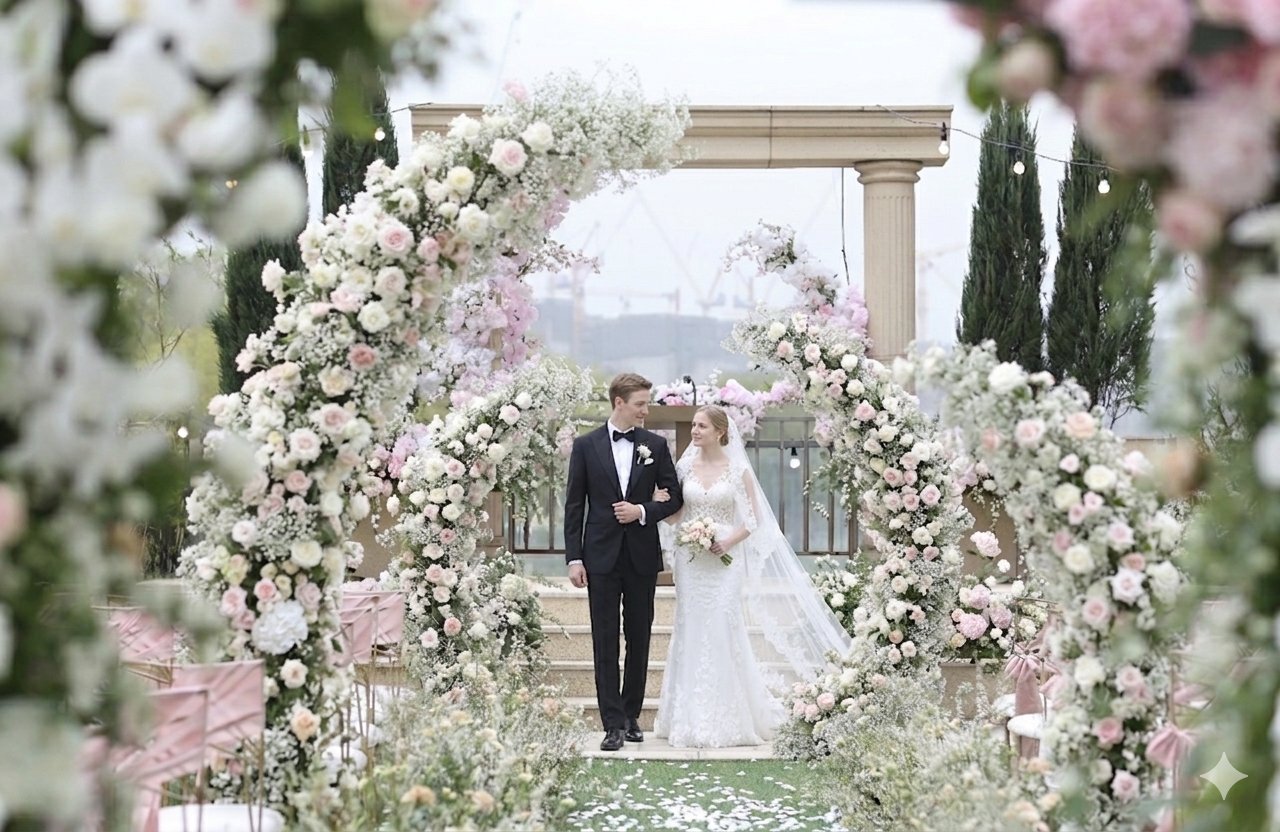
The second trend The Knot names is "true to life" editing: skin, flowers and sky left in their real colours, without the heavy or faded grading of recent years. Dewey writes that the distinctive colour grading of the past five years is over.
What you can do in Korea: when looking at a portfolio, compare the colour of pre-2023 work with recent work. Then write one line about editing into the contract: natural skin tones, no heavy filters. These are the photographs that will not look dated in ten years.
Trend 3 — Film, or like film
Film and hybrid film–digital coverage are growing again, for the depth and texture and for the attitude of making each frame count. Dewey gives two warnings: film is expensive because of rolls, developing and logistics, and a photographer offering "full film" at digital prices is cutting a corner somewhere.
What you can do in Korea: rather than shooting everything on film, a hybrid (part of the ceremony and portraits on film) is realistic for the cost. Putting Instax or disposable cameras on the tables for guests is in the same spirit, and The Knot's photographers name that as a trend too.
Trend 4 — Blur, motion and direct flash
Blurred shots that carry movement (the dance floor, the processional) and paparazzi-style direct-flash shots appear a few at a time — as accents, not the whole set.
What you can do in Korea: these work best at a wedding with an after-party. If your reception runs through dancing, toasts and speeches, tell the photographer in advance to shoot the party with flash and motion.
Trend 5 — The photographer starts the day before
The Knot's photographers describe coverage that extends to the welcome dinner and the next-day brunch. Couple and guests get used to the camera, and a weekend rather than a day is recorded.
What you can do in Korea: for an international couple with family flying in, adding one hour at the welcome dinner the night before gives the most. The moment the two families first meet is there.
Trend 6 — Drones: from a distance, never during the vows
Aerial drone shots remain popular, with conditions. The Knot notes permits, extra cost and venue approval; Dewey writes that drones buzzing overhead during the vows are finished. A drone is for the wide shot, not the ceremony.
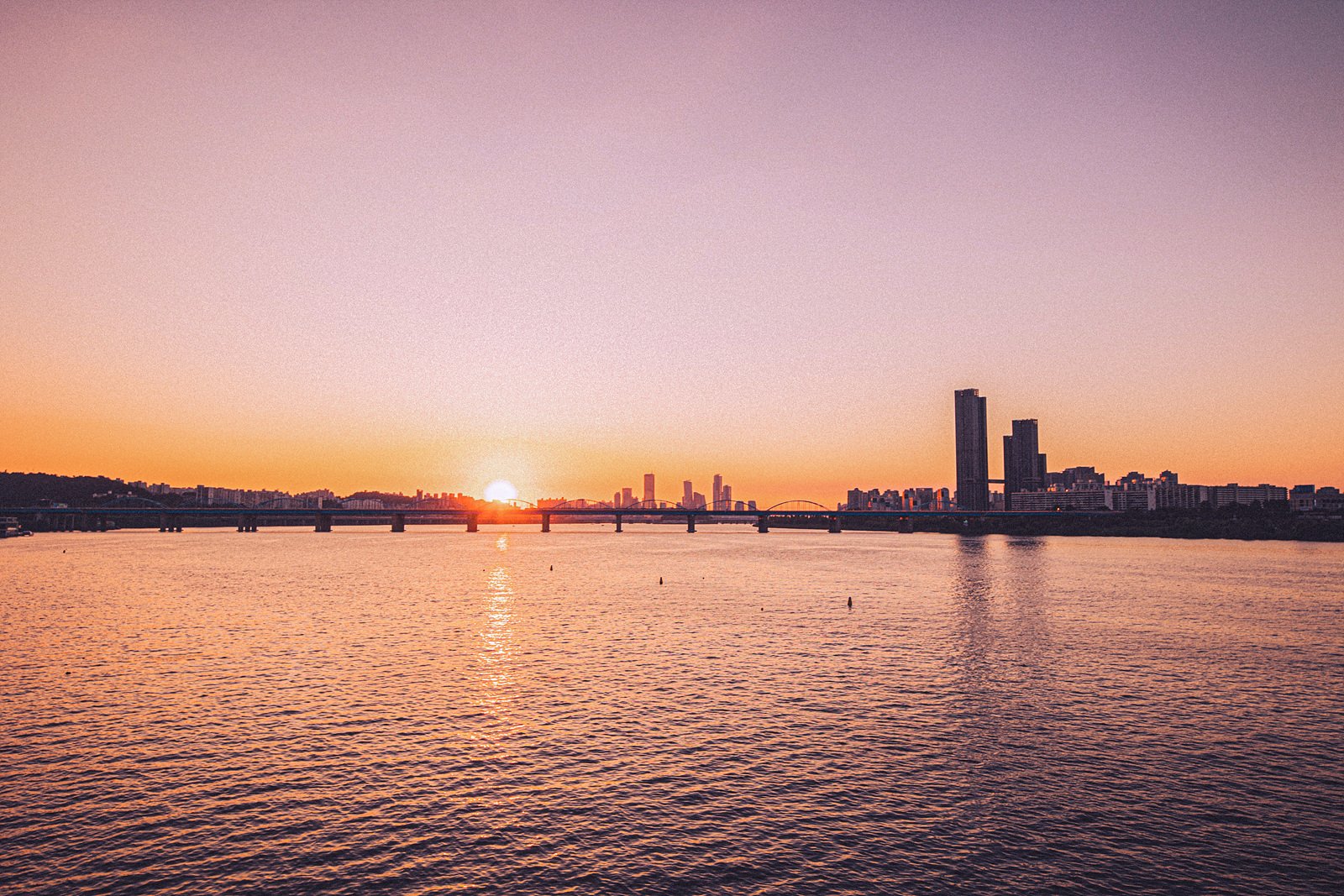
What you can and cannot do in Korea: much of the Han River in Seoul is restricted airspace, so most venues there cannot allow drones. If you want one, ask the venue first; if not, substitute a shot looking down from a rooftop or high floor. At a venue with a view, the effect is the same without a drone.
Trend 7 — Printing
The move is back to printing albums and frames instead of leaving photographs in the cloud. Dewey names blue-hour portraits (just after sunset) as a new highlight — calmer and more intimate than golden hour.
What you can do in Korea: for an outdoor or rooftop wedding, put fifteen minutes of blue-hour portraits in the running order — around 7:40 pm in May, around 6:00 pm in October. Those fifteen minutes are the great advantage of an evening slot.
What to check when applying this in Korea
| Trend | What to ask the venue |
|---|---|
| Documentary | Any limits on where the photographer may move; positions during the ceremony |
| True colour | (Not venue-related) state the editing direction in the photographer's contract |
| Film, disposable cameras | Whether cameras may be left on tables and how they are collected |
| Blur and flash | Whether there is time for an after-party and dancing (a wedding of three hours or more) |
| Coverage the day before | Whether there is a welcome-dinner space on site |
| Drones | Whether flying is permitted and the venue approves; otherwise a high-floor view |
| Blue hour | Whether it is an evening slot, with access to an outdoor area or rooftop |
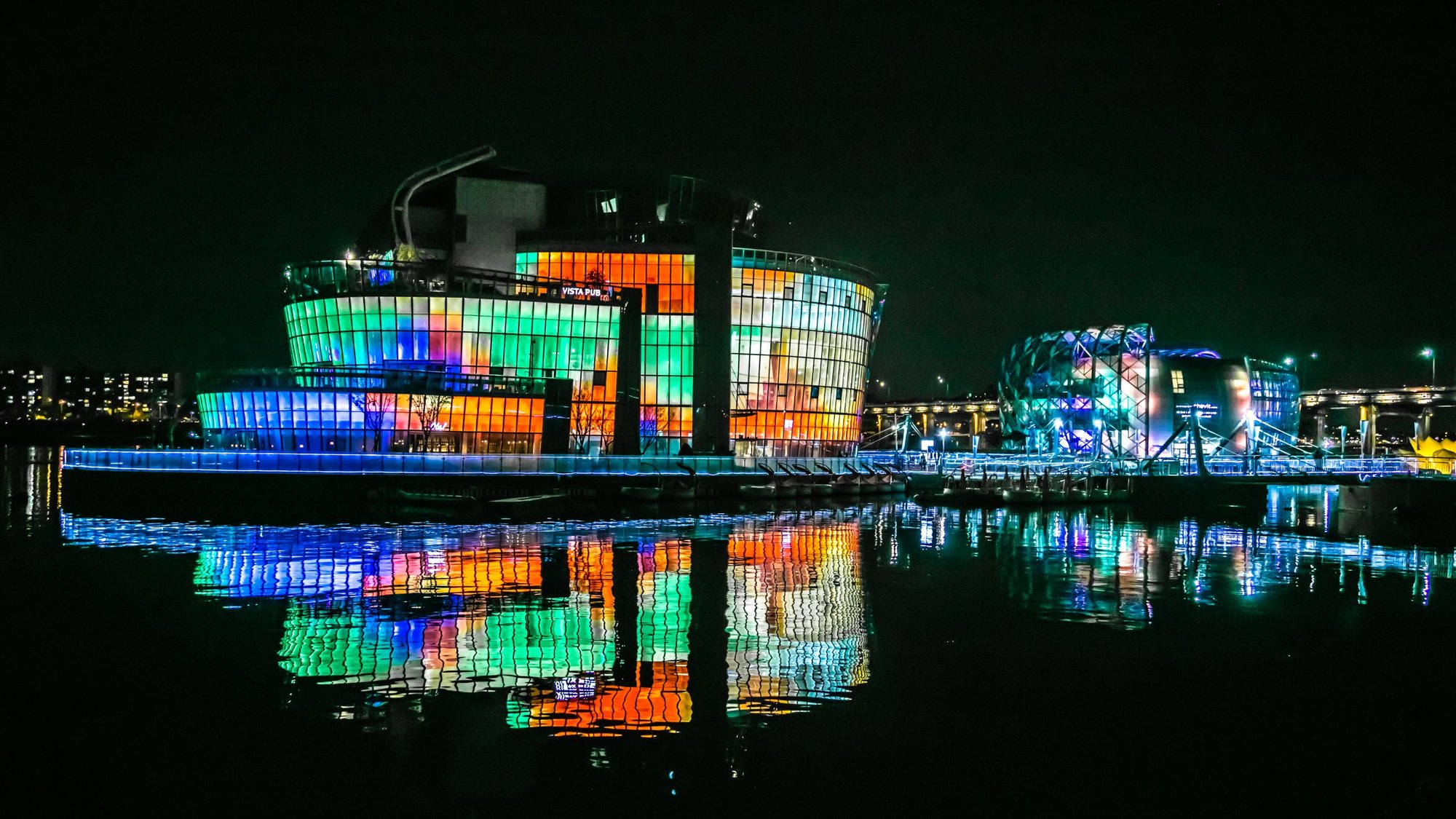
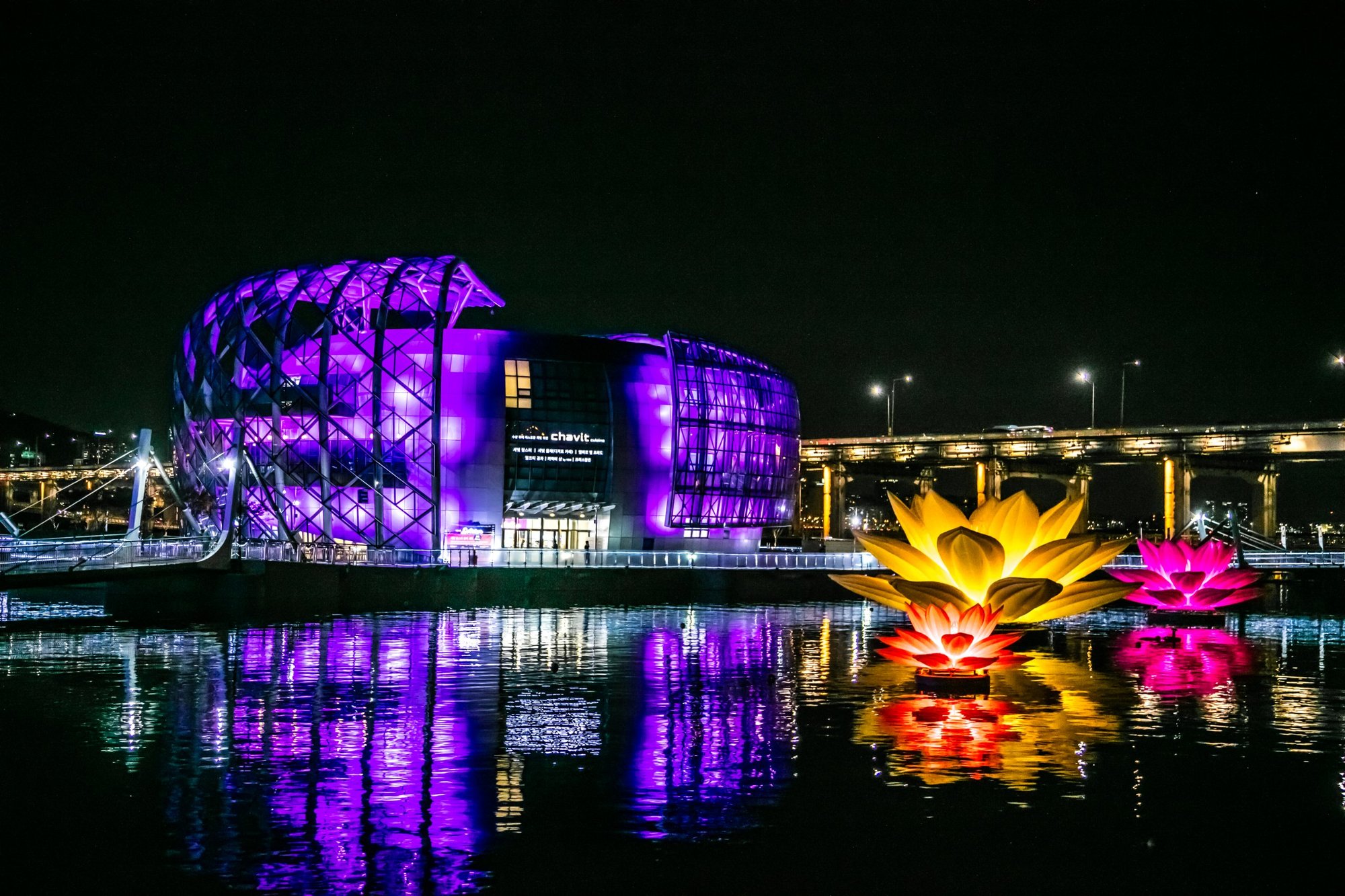
For example, the rooftop at Sevit Island on the Han River in Seoul gives a wide shot over the river and city without a drone, and in the evening slot the moment just after the ceremony falls in blue hour. At any venue, whether there is glass or open air facing the sunset in the evening slot decides half of the 2026 photography trends.