
The white wedding dress is not an ancient universal rule. It is a Western custom that spread when a royal image from 1840 met industry, the press and consumer culture. (As of November 2026)
Before 1840, brides wore their best dress
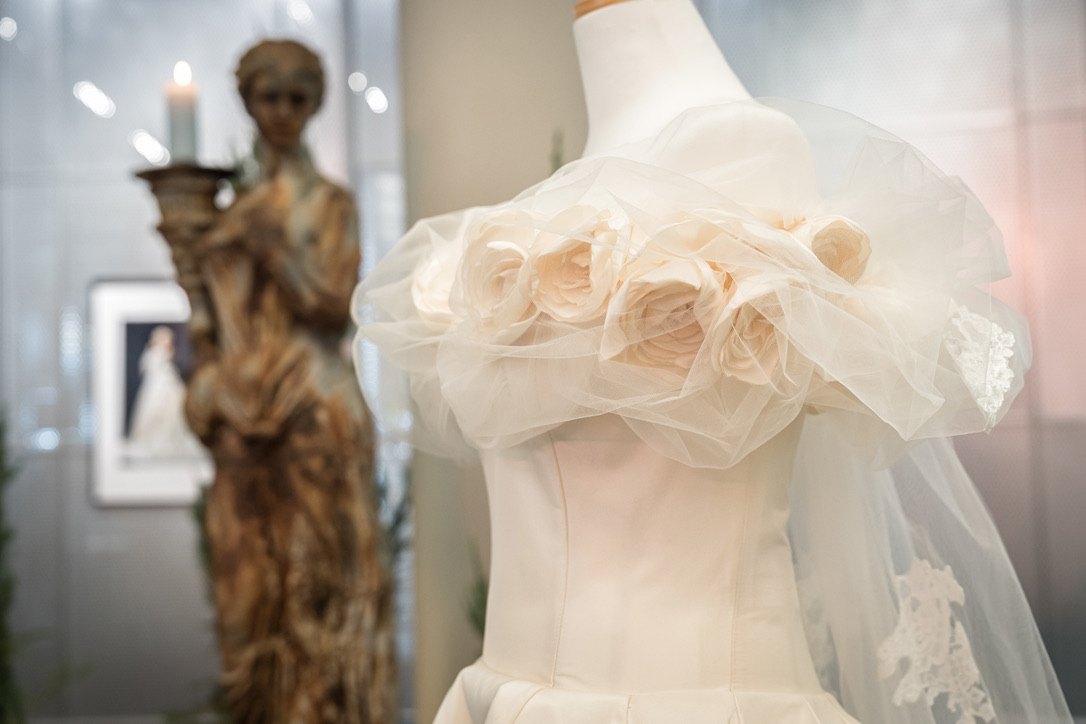
Before Queen Victoria, Western brides wore many colours — red, pink, blue, brown, black. The V&A's Wedding colour and Britannica's Why Do Brides Wear White? explain that white was not a fixed rule and that many brides chose the best dress they already owned or one they could wear again after the wedding.
So it is not accurate to call Queen Victoria the first to wear a white dress. White bridal dress existed before her, but the V&A's The Victoria connection and the Smithsonian Institution Archives hold that the royal wedding of 1840 decisively popularised white.
10 February 1840: what the white ground showed
Victoria and Albert married on 10 February 1840 in the Chapel Royal at St James's Palace. The Queen chose white-to-ivory silk satin, handmade Honiton lace and orange blossom. These details are confirmed by both the Royal Collection Trust's Wedding flowers and a 2025 article in Smithsonian Magazine.
Reduce the reason to "purity" alone and important context is lost. The V&A explains that a white ground showed off the Honiton lace and that the choice was also meant to support the struggling English lace industry; the Smithsonian likewise confirms the choice of Spitalfields silk and handmade lace.
How a royal image became "tradition"
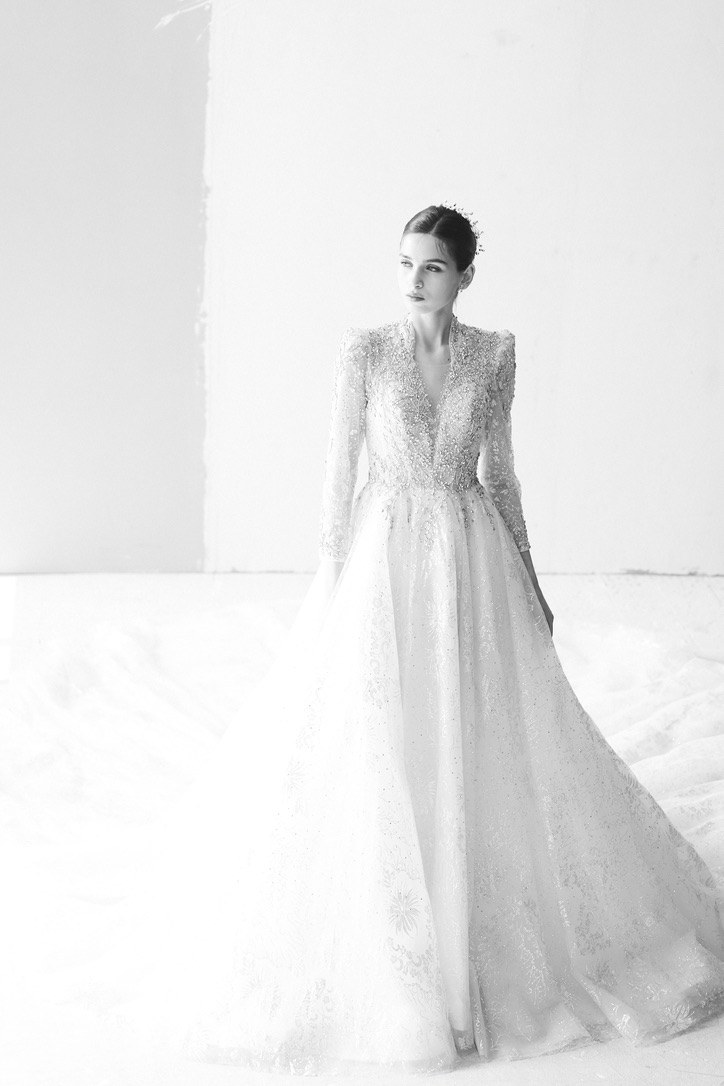
Newspapers, fashion plates, advertisements and commemorative prints repeated the white dress and lace veil. The V&A and Britannica explain that at first those who could afford white — hard to clean and to wear again — followed the royal image, and that it later spread more widely.
The link between white and the bride's purity is not an age-old rule either. The V&A and the Smithsonian Institution Archives see Victorian print culture and the twentieth-century bridal industry as having reinforced the image of romance and innocence. Today white is less a statement of purity than a choice of the culturally familiar image of a bride.
2026: the colour stays, the form changes
The 2026 collections do not abandon white; they change the structure. Brides' analysis of Spring 2026 and Vogue's review of New York Bridal Fashion Week both point to layered lace, exposed boning, basque waists and sculptural silhouettes.
Nor do brides insist on one dress. Martha Stewart's 2026 dress trends highlights elements that can be recombined — detachable sleeves, overskirts, corsets — and Junebug Weddings' 2026 forecast emphasises architectural draping and clear shapes.
What to check when applying this in Korea
| Item | Guideline |
|---|---|
| Colour | Compare pure white, ivory and champagne against your skin tone and under the venue's lighting |
| Fabric | See how lace and satin look under the hall's lights and in photographs |
| Structure | Test sitting and eating in a basque waist or corset |
| Changes | Check that detachable sleeves or an overskirt can really be changed between parts of the day |
| Movement | Set the length to suit the floors, stairs and outdoor routes of ceremony and reception |
Summary
Queen Victoria did not invent the white dress. Her choice of a white ground to show English lace was reproduced through royal coverage and industry until it became custom, and in 2026 it is being rewritten by adding layers, corsetry and convertible structures to the same colour.
Recreating it at a wedding in Korea today
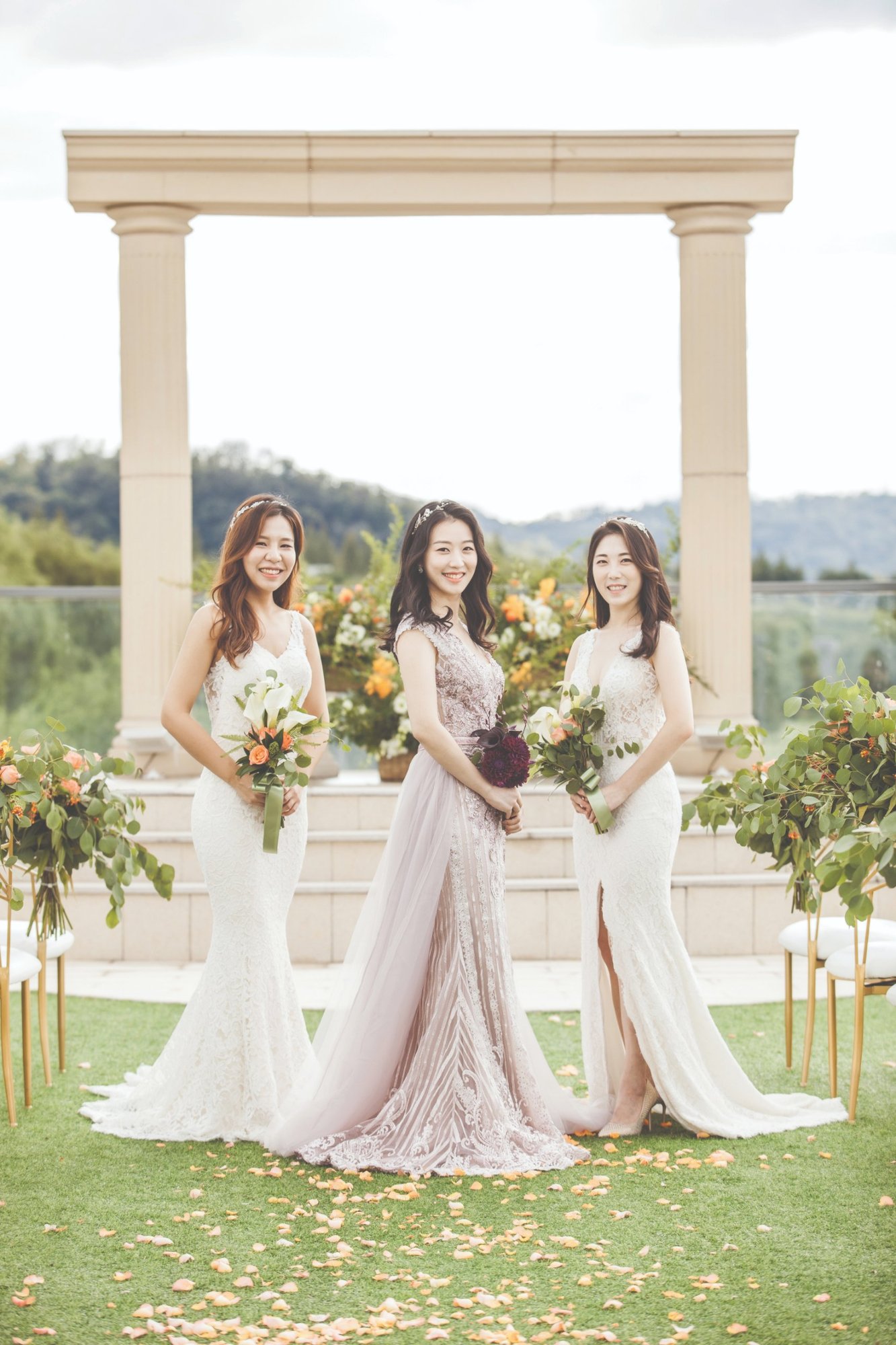
For the ceremony, keep one element that holds up under lights and in photographs, such as ivory silk with dimensional lace; for the reception, remove the detachable pieces to move freely. As a local example, Sposabella states that it designs and makes wedding and party dresses together — an approach worth noting for how one atelier links the ceremony look to what follows.
Sources
- V&A, Wedding colour
- Britannica, Why Do Brides Wear White?
- V&A, The Victoria connection
- Smithsonian Institution Archives, The Bride Wore White (or Blue, Green, or Black!)
- Royal Collection Trust, Wedding flowers
- Smithsonian Magazine, One of Britain’s Most Beloved Royal Couples Wed on This Day in 1840
- Brides, Basque Waists, Bubble Hemlines, and More: 7 Must-Know Trends From New York Bridal Fashion Week Spring 2026
- Vogue, The Top Wedding Dress Trends From New York Bridal Fashion Week
- Martha Stewart, The Wedding Dress Trends That Will Define 2026—and Beyond
- Junebug Weddings, 2026 Wedding Trend Forecast