
A tiara feels like an ornament permitted only on the wedding day. For a long time that was literally true: in aristocratic society a young woman wore a tiara for the first time at her wedding. Here is how a headdress that marked a king's authority became the bride's, what types there are and how to choose one. The story of the veil is in The Bridal Veil: Its Origins and Its Types.
Antiquity: the headband of kings and victors
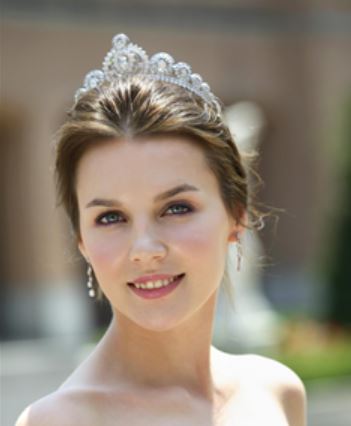
The word "tiara" comes from Latin by way of Greek. According to Wikipedia's entry on the tiara, it first denoted the high, peaked headdress of Persian kings. The auction platform Barnebys begins its history of the tiara with the Greek diadema, meaning "headband", at first a simple cloth tied around the heads of Olympic victors.
That headband soon became a sign of authority, worn by Persian shahs, Egyptian pharaohs and Hellenistic kings. In Rome, wives adopted crescent-shaped headbands around the first century, and diadems became fashionable among emperors in the third. Greeks and Romans also made gold ornaments in the shape of wreaths.
The Middle Ages: a thousand years away
With the fall of Rome and the rise of Christianity the tiara disappeared. Medieval women covered their hair with hoods, and royalty wore crowns. In the seventeenth and eighteenth centuries queens again began to wear head ornaments to show their rank, but the large hairstyles of the time kept the custom from spreading.
Napoleon and Joséphine: the tiara returns
What revived the tiara was the Neoclassicism of the late eighteenth century. As antique styles came into fashion, women wore high-waisted dresses resembling Roman tunics, with a tiara in their hair. The court of Napoleon and Joséphine led the fashion. According to Barnebys, the Empress owned many tiaras, often as part of jewellery sets given to her by Napoleon.
One of them, a cameo diadem, passed to her granddaughter and into the Swedish royal family, and Crown Princess Victoria wore it at her wedding in 2010. Two centuries later it was again on a bride's head.
In the nineteenth century the tiara became essential at court ceremonies and balls, and a customary gift to brides. Wikipedia puts the peak of its popularity between 1890 and 1914.
Weddings and the tiara: the first day it was worn
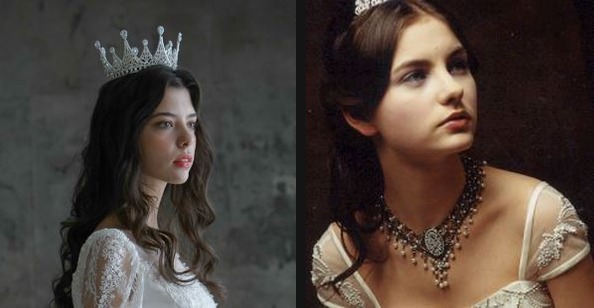
Etiquette is what tied the tiara to the wedding. The tradition as Wikipedia records it:
- A young woman did not wear a tiara before she married.
- On her wedding day she wore, for the first time, a tiara belonging to her own family.
- After marriage she wore only tiaras of her husband's family or her own.
- Unmarried princesses could wear one from the age of eighteen.
These rules are no longer strictly applied in the twenty-first century. The sense of an ornament first worn on the wedding day has nevertheless lasted.
The twentieth century: fading with short hair
After the First World War the tiara declined quickly. Wikipedia's explanation is striking: alongside social and economic change, hair was cut short and washed more often, leaving it too smooth to hold a tiara. Slim Art Deco bands suited short hair, and tiaras returned briefly in the 1960s with the beehive.
After that they were seen mainly at state banquets, royal weddings and coronations, and interest has grown again in the twenty-first century. Which tiara a royal bride chooses is still closely watched.
Types of tiara
| Type | Form | Works for |
|---|---|---|
| Bandeau | A low, flat band like a ribbon or hairband | Short hair, heavily decorated dresses, small weddings |
| Kokoshnik | From the traditional Russian headdress, a wall of gemstones | Large halls, dresses with a simple silhouette |
| Circlet | Extends around the whole head | Hair worn down, garden weddings |
| Fringe | Diamonds set like a fringe, also wearable as a necklace | Updos, classic gowns |
A matching set with necklace, earrings, brooches and bracelets is called a parure. Some tiaras are made to come apart into pieces worn separately.
Wearing one at a wedding
Today a tiara is a hair ornament, not a family jewel. There are four things to weigh.
- It should not compete with the dress. A slim band for a heavily beaded dress, a taller tiara for a simple one.
- Consider it with the necklace. With an elaborate tiara, reduce the necklace. With a small tiara, let the necklace carry more.
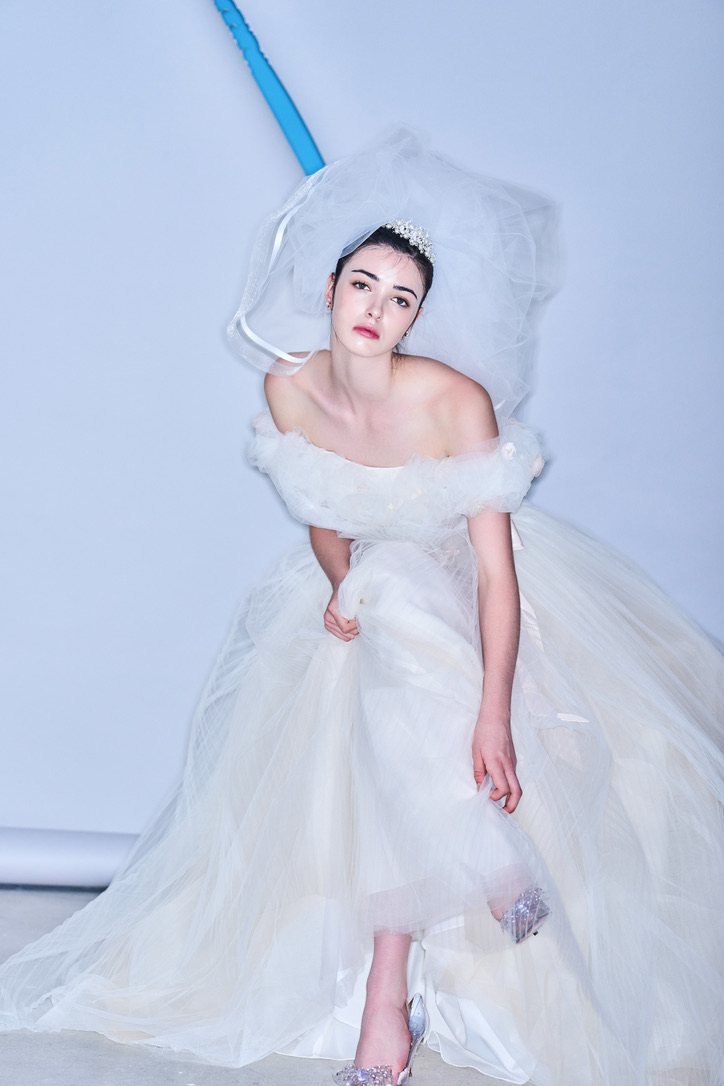
- Decide the order with the veil. Fix the tiara first and pin the veil behind it, so the tiara stays when the veil comes off.
- Settle the hairstyle first. A tiara needs hair with some hold. Take it to your hair trial.
What to check when applying this in Korea
| What to check | Why it matters |
|---|---|
| Whether the dress shop can fit tiara and veil together | Chosen separately, colour and detail clash |
| The scale and lighting of the hall | A taller tiara reads in a large hall, a slim band up close |
| Whether you can try the tiara at the hair trial | Position and hairstyle are agreed in advance |
| Wind and sun, if outdoors | Use plenty of pins for light ornaments, and check highly reflective stones in photographs |
| Whether the tiara is changed or removed for the second part | A generous time slot leaves room to redo the hair |
In a hall with a high ceiling and a long aisle, such as one wedding venue on the Han River in Seoul, the height and sparkle of a tiara carry a long way. Taking photographs of the hall to the dress shop helps you decide the size together.
Summary
- The tiara comes from the headdress of Persian kings and the Greek headband, and was long a sign of authority.
- It vanished in the Middle Ages and returned with Neoclassicism and Napoleon's court in the late eighteenth century.
- In aristocratic society a bride wore her family's tiara for the first time on her wedding day.
- Today it is chosen for its balance with the dress, the necklace, the veil and the hairstyle.