
Hidden by the hem and rarely seen, the shoes are what walk with the bride from the start of the day to the end: from the bridal room to the aisle, from the aisle to the guests' tables, and on to the last dance. Perhaps that is why so many Western wedding customs are about shoes. The best loved of them is a single coin placed in the bride's shoe. The stories of the veil and the tiara are in The Bridal Veil: Its Origins and Its Types and The Tiara: From a King's Headdress to the Bride's, and this year's shoe designs are in The 2026 Trends.
A silver coin in the shoe: a father's last gift to his daughter
England has an old rhyme about what a bride should carry for luck: something old, something new, something borrowed, something blue. That much is well known. The Royal Mint points out that the rhyme has a less familiar final line: and a silver sixpence in her shoe.
The custom goes like this. Just before the bride steps onto the aisle, her father slips a silver sixpence into her shoe. According to the Mint, the coin brings good luck and stands for the father's wish that his daughter's marriage will be a prosperous one. The walk they take arm in arm lasts only a few steps, but the coin under her foot goes with her on the road beyond.
So the coin is read less as money than as feeling. A father puts into a small piece of silver what he cannot quite say, and lays it under his daughter's first step. She feels that small weight with every pace. One might take it as a promise too: to keep walking, step by step, on the smooth days and the slightly uncomfortable ones, and to tread through together whatever difficulties married life may bring.
Sweden has a sister custom. According to the Mint's round-up of coin traditions, a Swedish bride receives a gold coin from her mother for her right shoe and a silver coin from her father for her left, with the wish that she will never go without. She walks into her new life with her mother's blessing under one foot and her father's under the other.
In Britain there is also the saying that a bride should begin married life "walking on gold". The fact-checking site Snopes, in its survey of wedding shoe customs, records the folk belief that a gold coin in the shoe secures the prosperity of the household.
The sixpence is no longer in circulation, so, as the British bridal shoe brand The Perfect Bridal Company notes, brides today keep the custom with a penny or another coin. Some choose a coin minted in the year of the wedding, keep it, and one day pass it on to a daughter.
Shoe customs from several countries
Shoes have long been a symbol at weddings. What follows is folklore, and Snopes itself says the explanations of origin are "said to be" so, not established history.
- Throwing shoes: old shoes were thrown after the couple as they left for their honeymoon, and a shoe that hit either of them was thought especially lucky. Tying shoes to the car is said to come from this.
- The shoe a father hands over: in Anglo-Saxon times the bride's father is said to have given one of his daughter's shoes to the groom, a sign of entrusting her to him.
- The shoe tossed on the stairs: the bride or her chief bridesmaid threw the right shoe to the guests at the foot of the stairs, and whoever caught it would be next to marry. A cousin of the bouquet toss.
- Names on the sole: The Perfect Bridal Company describes a custom with Turkish roots in which unmarried friends sign the soles of the bride's shoes. The one whose name is most worn away by the end of the night will be the next bride.
- Embroidered shoes: the same article says that in imperial China the designs on hand-embroidered shoes signalled the standing and education of the bride's family.
Some of these look strange now, but the feeling behind them is the same: a wish to bless the steps that carry someone into a new life.
Design: from shoes that were hidden to shoes that are shown
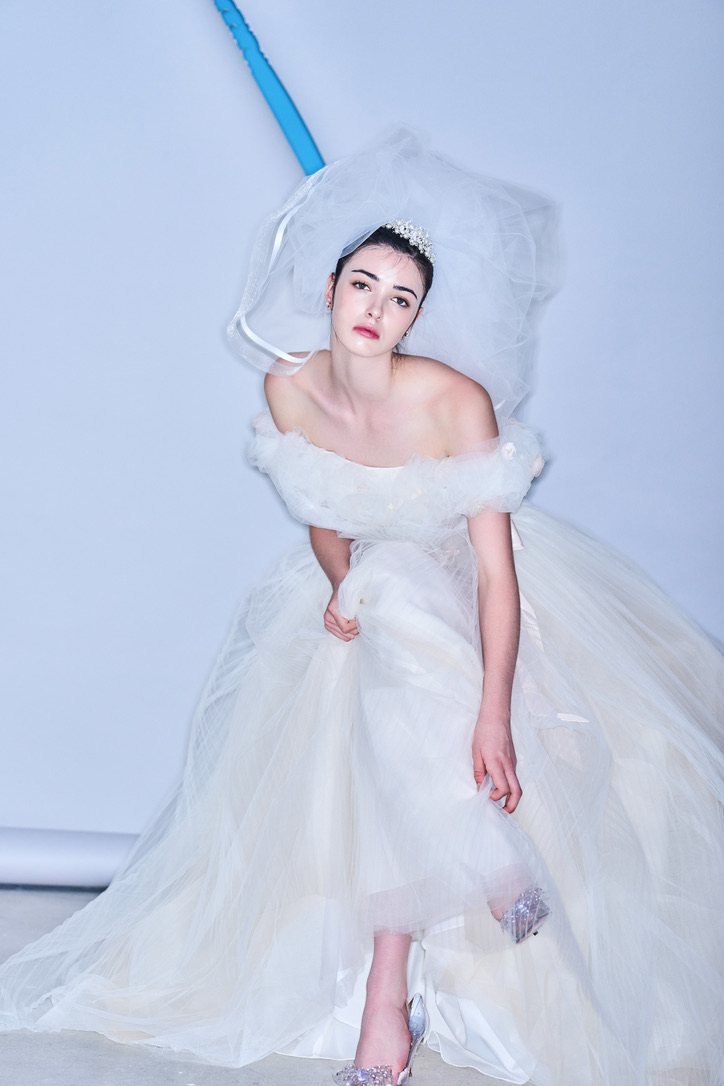
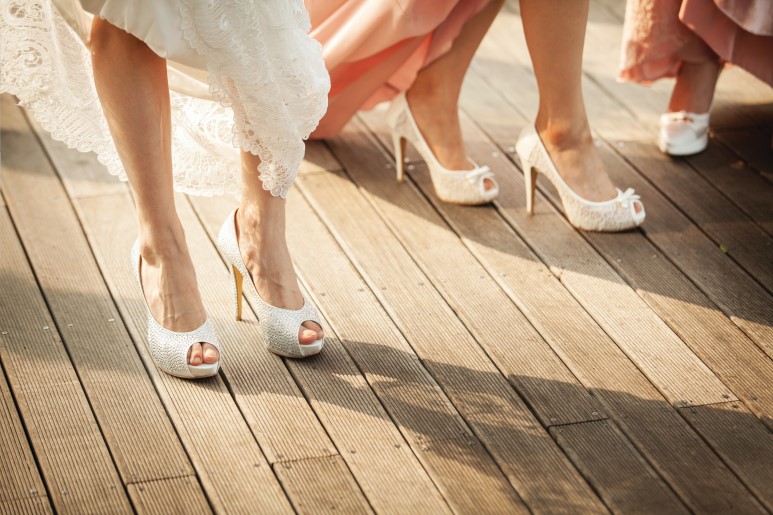
For a long time wedding shoes were covered by a floor-length dress, and the rule was simple: white or ivory, the same fabric as the dress, nothing that drew the eye. As hemlines rose and second dresses became common, shoes entered the photographs and the choice widened.
| Type | Character | Works for |
|---|---|---|
| Pumps | The closed-toe classic | Any dress, indoor halls |
| Slingbacks and straps | Hold the heel or ankle | Weddings with long standing or dancing |
| Block heels | A broad heel that spreads the weight | Outdoor venues with grass, decking or stone |
| Wedges | One continuous sole | Garden weddings. They do not sink into grass |
| Flats and ballerinas | Almost no heel | The second part and after-party, or balancing a height difference |
| Boots and trainers | Worn with a short dress | A casual second part, outdoor parties |
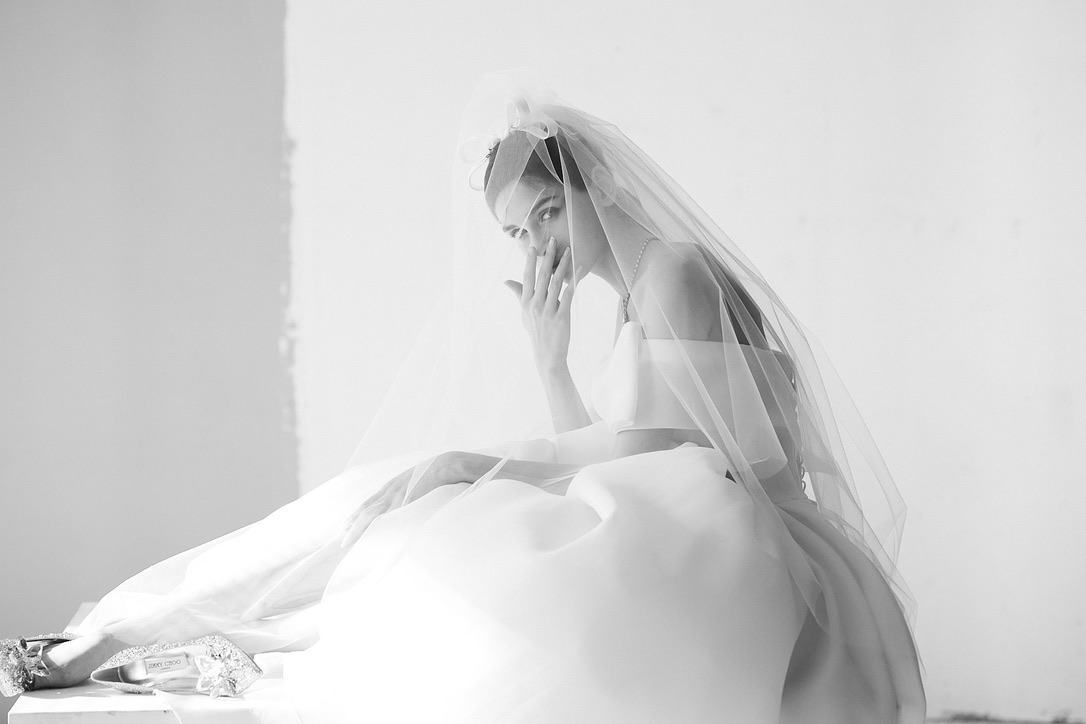
Colour no longer stops at white. Many brides let their shoes be the "something blue" of the rhyme, or put colour only on the sole or lining. THE WED names three-dimensional florals, mesh, and sculptural heels cut from crystal or metal among its bridal shoe trends for 2026.

Photo: Katelyn MacMillan / Unsplash

Photo: Thomas William / Unsplash

Photo: Jean Jacobs / Unsplash
Walking comfortably through the day
- Wear the shoes to your dress fitting. The hem is set to the heel height. Change the shoes later and the length will be wrong.
- Break them in. From two or three weeks before, wear them at home with socks, a little at a time.
- Look at the floor first. Thin heels sink into grass and decking. Marble is slippery, so add non-slip pads to the soles.
- Bring a second pair. One for the ceremony, one for dinner and the party. A change in heel height can leave the hem dragging, so plan it with your second dress or a bustle.
- Walk the entrance. If the aisle is long, walk its full length in your shoes at the rehearsal. Once more if there are steps.
- If you carry a coin, secure it. A thin coin under the insole, or taped in place, will not move as you walk. If it will not fit in the shoe, fix it to the sole or tie it to the bouquet handle. The meaning is the same.
- Pack a small kit. Heel pads, plasters and spare insoles in your bridal room bag.
What to check when applying this in Korea
| What to check | Why it matters |
|---|---|
| Floor surface (grass, decking, marble, carpet) | It decides the heel |
| Length of the aisle, and any steps | Match heel height to the walk |
| The route from the bridal room to the hall | A long walk or an outdoor stretch calls for a change of shoes |
| Whether you enter with your father | The moment with the coin needs a little time in the bridal room |
| Whether the photographer knows | The moment is brief. It is only captured if they are told |
| Whether the time slot is generous | You need time to change shoes and come back for the second part |
The custom is not a Korean one, but a father slipping a coin into his daughter's shoe in the bridal room can be added without changing the running order. At a venue with a generous time slot, such as one on the Han River in Seoul, there is room to capture it unhurried in photographs and film before the entrance. For an international couple it becomes a small scene both families can smile at together.
Summary
- In England a father slips a silver sixpence into his daughter's shoe, a wish for luck and a prosperous marriage.
- A Swedish bride places her mother's gold coin in her right shoe and her father's silver coin in her left.
- Customs such as throwing shoes or signing the sole come from a wish to bless the steps into a new life.
- Shoes are now seen. Choose them for the floor and the length of the walk, and bring a second pair.
Sources
- The Royal Mint, Something Old, Something New, Something Borrowed, Something Blue
- The Royal Mint, Classic Coin Wedding Traditions
- Snopes, Wedding Shoes
- The Perfect Bridal Company, Bridal Shoe Traditions
- THE WED, Major Bridal Shoe Trends for 2026